Germany: copper cookware duty and compliance guide
Selling copper cookware into Germany: zero duty under the customs union, the EU food contact framework, the LFGB layer, and what this market calls copper.
What is on this page
The obstacle to selling copper cookware in Germany is not duty. The customs union puts the rate at zero and the only paperwork is an A.TR certificate. The real question is what this market means by the word copper: a large share of what German wholesale catalogues list under that name is copper-look steel, and the price anchor has settled there.
Duty is simple, the document is not
The customs union between Türkiye and the EU covers industrial products. Copper cookware sits inside that scope and the rate is zero. Coal and steel products and agricultural goods sit outside it; copper does not.
In exchange an A.TR movement certificate must be issued, and the most common mistake is mistaking what it is. A.TR is not a proof of origin. It is a free circulation document. It shows that the goods are in free circulation within the Union, not where they were made. Cases that need origin evidence are separate and call for a separate document.
The framework is general, the enforcement is national
The applicable framework for food contact materials is the general 1935/2004 regulation together with the good manufacturing practice regulation. For metals there is no product-specific EU measure; ceramics and plastics have their own, metals do not.
Two things fill the gap. First, national provisions of member states, which the framework regulation explicitly allows. Second, the Council of Europe technical guide for metals and alloys, which is a reference and not binding law. That distinction matters: presenting a figure from the guide as a legal limit misleads the buyer.
In Germany the framework is tied into national food law, and placing a non-compliant article on the market is directly prohibited. The EU rule is not an abstract obligation here; it carries a sanction.
Two labelling conditions get missed
Two articles of the framework regulation are the ones most often overlooked.
The first is the responsible person established in the Union: the label must carry the name and address of a responsible manufacturer, processor or seller, and that party has to be established in the EU. A workshop in Türkiye cannot satisfy this alone; the importer or an authorised representative takes the role.
The second is language: information must be in a language easily understood by purchasers, and a member state may require its own official language. For Germany the expectation is German.
What this market calls copper
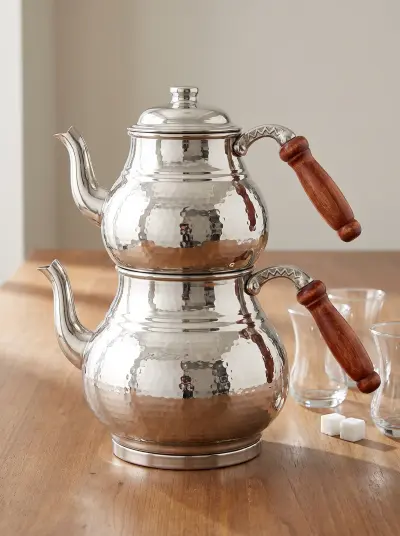
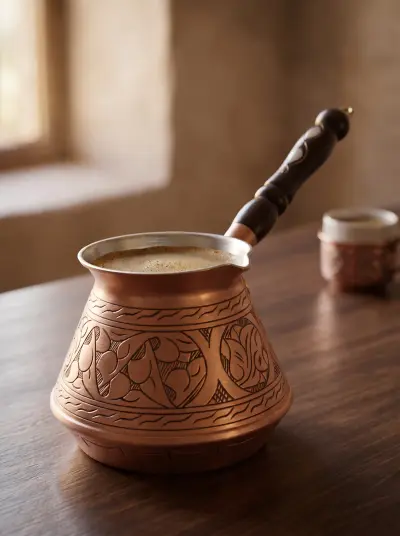
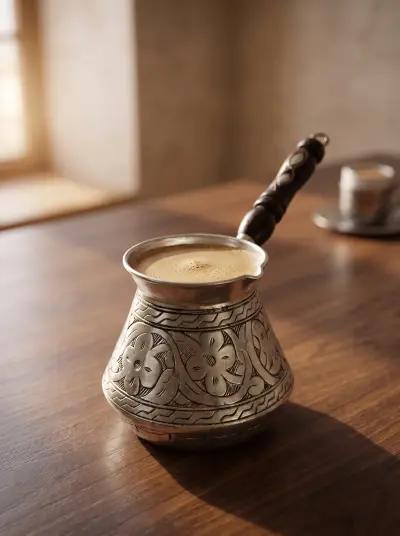
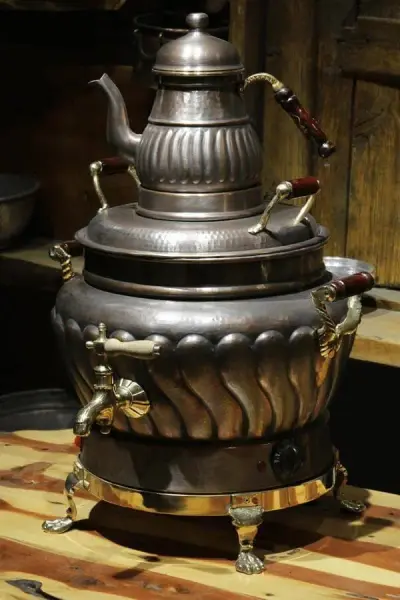
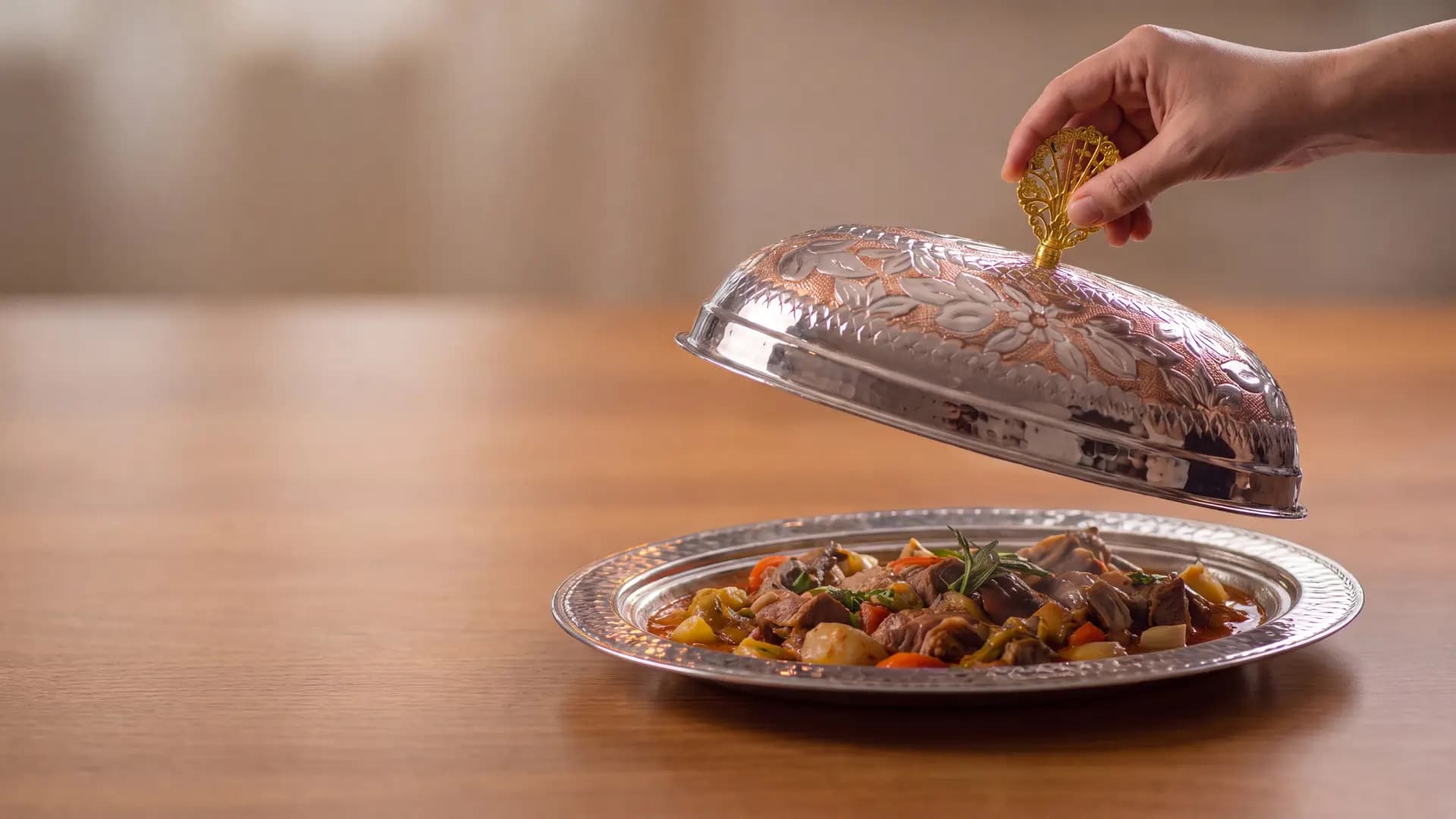
This is the most practical thing on the page. A significant share of the serving ware listed as copper in German wholesale hospitality catalogues is copper-look stainless steel. A line whose product name contains copper routinely shows chrome nickel steel in the material field, and the buyer's price range has formed around that.
The consequence is direct: an offer of solid copper that does not say so plainly is judged in the same basket as coated steel and simply looks expensive. The right move is not to defend the price but to separate the category — material, gauge and lining belong in the first line of the quotation.
How to show the difference between solid and plated work is covered in the serving and buffet equipment guide. For finish and specification language see the surface finish guide, and for the production side of the handwork itself the four copper clusters of Türkiye.
Duty and taxes
| Item | Value | Source |
|---|---|---|
| Customs duty | Zero — free circulation under the EU customs union | European Commission, customs union with Türkiye |
| Required document | A.TR movement certificate (a free circulation document, not proof of origin) | European Commission, customs unions and preferential arrangements |
| Scope | Copper is an industrial product inside the customs union; coal and steel products and agricultural goods sit outside it | European Commission, customs union scope |
| Hand-made line | TARIC line 7418 10 90 10 codes hand-made articles separately ('Hand-made'); the 8-digit parent 7418 10 90 is 'other' | EU TARIC nomenclature, 7418 10 90 10 |
Compliance regime
| Topic | What it means for the product | Source |
|---|---|---|
| Framework | General safety and inertness obligation for materials and articles intended to come into contact with food. | Regulation (EC) 1935/2004 |
| Good manufacturing practice | Production must run under a documented quality assurance system. | Regulation (EC) 2023/2006 |
| Specific measure for metals | There is no EU-wide specific measure for metals. National provisions and a Council of Europe technical guide fill the gap; the guide is a reference, not binding law. | European Commission food contact legislation page; Council of Europe CM/Res(2020)9 |
| Responsible person | The label must carry the name and address of a responsible manufacturer, processor or seller established within the Union. A Turkish workshop cannot satisfy this alone. | Regulation (EC) 1935/2004, Article 15(1)(c) |
| Language | Information must be in a language easily understood by purchasers, and a member state may require its own official language. | Regulation (EC) 1935/2004, Articles 15(4) and 15(5) |
| German layer | The EU requirements are tied into national enforcement; placing a non-compliant article on the market is directly prohibited. | LFGB § 30 and § 31(1) |
This page is a map, not legal advice. Rates and rules change during the year; confirm with your own customs broker and the competent authority of the target market before you file.