Copper Foot Bath Basin — 40 cm, polished copper
TC50017-1
Build a copper home and gift assortment for your store: which families to open with, stock status, finish variants, food-contact labels, packaging, care cards.
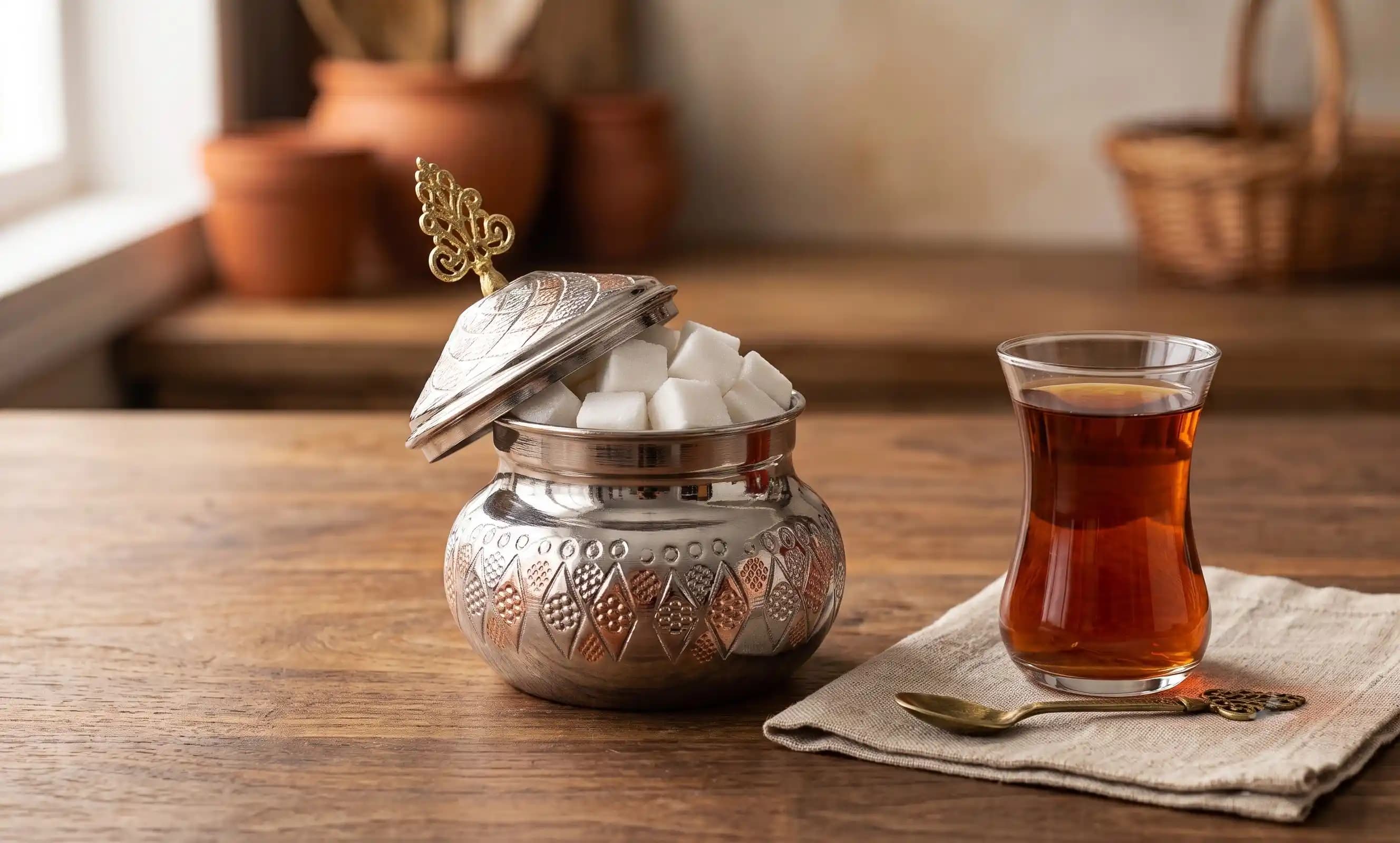
Browse the range, add the pieces you need to your quote list and ask for prices in one message. No account, no online prices.
A copper gift assortment for a store needs fast-turning pieces that sell on their own story, unlike a kitchen supply order. Open with fully stocked families: planters, spice jars, pails, ice buckets and hammam bowls. Then add candle holders, sugar bowls and incense burners as the display layer, in two or three finishes each.
A copper gift assortment differs from cookware procurement because the product reaches the end customer on a shelf, in retail packaging, with a short explanation attached. A hotel buyer ordering copper pots looks at wall thickness, tin lining and daily service load. A home decor store, a museum shop or an online boutique works with four other questions.
The first is sell-through. Kitchen equipment is bought once and used for years. A gift shelf turns over season by season, and a piece that does not sell occupies space that could hold one that does. The first shipment of a new category is therefore best treated as a measured test: which family moves, at which price point, in which finish.
The second is packaging. In a commercial kitchen the item leaves the carton and goes on the pass. In a store it leaves the carton, gets labelled, sits on a shelf, and must reach the till without a scratch after being handled by customers. Packaging is part of the product here, not just transport protection.
The third is the story per item. A gift buyer wants to know why copper, why Turkey and why this price. Hand-hammered versus smooth bodies, why the colour changes over time and where the piece was made are the raw material for that answer.
The fourth is durability. Copper does not shatter like glass or ceramics, which is a genuine advantage on a gift shelf and in parcel shipping. Decor pieces are made from thin sheet, though, so they can dent and the surface can scuff. In The Coppery's home decor group, sheet thickness where measured runs from 0.45 mm to 0.70 mm: light enough to keep freight economical, thin enough that inner packaging is not optional.
In English-speaking markets one more point belongs on the label. Some retail product sold under a copper name is copper-coloured: plated steel, coated aluminium, or a copper-finish lacquer on another metal. Every product discussed here is listed with copper as its material, and stating that on the shelf label is what justifies the price against copper-look alternatives.
The Coppery, based in Kahramanmaraş, Turkey, is the single supplier behind this catalogue: every item carries a stock code and is priced through the quote list. The home decor group lists 89 products, the storage group 38 and the sugar bowl group 35. The plan below turns those three groups into a retail assortment.
A store should open with families that are fully in stock as the backbone and use partly stocked families for the display layer. The table shows model counts and stock status for nine families, taken from catalogue data on 16 November 2026; stock changes, so check the category page when you build the list.
| Product family | Series and formats | Models and stock | Role on the shelf |
|---|---|---|---|
| Planters | Kabak hand-hammered 10 to 20 cm, Bahar smooth 8 to 14 cm, sets of 3 and 4 | 23 of 23 in stock | Backbone, can go on the list now |
| Spice jars | Safran No. 1 to 4 and set of 4, Tabbal dome with or without spoon | 24 of 24 in stock | Backbone, can go on the list now |
| Pails | Elit pail 13, 15, 17 cm, hand-hammered | 9 of 9 in stock | Backbone, can go on the list now |
| Ice buckets | Mercan 24 cm, Adalı 15 cm, Gerdel | 5 of 5 in stock | Display, can go on the list now |
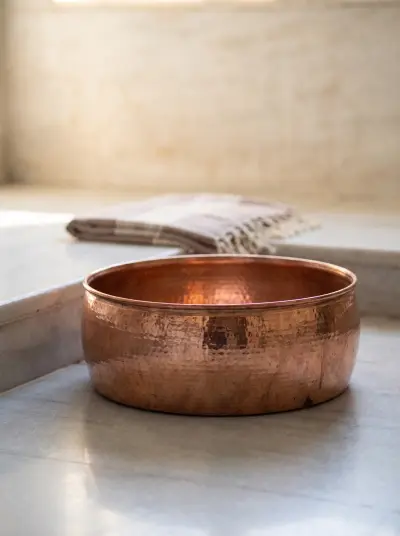
| Hammam bowls | Kurnacı 16, 18, 20 cm, hand-hammered | 6 of 6 in stock | Story piece, can go on the list now |
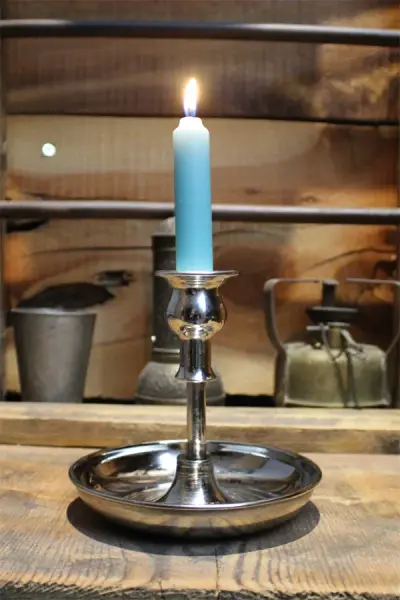
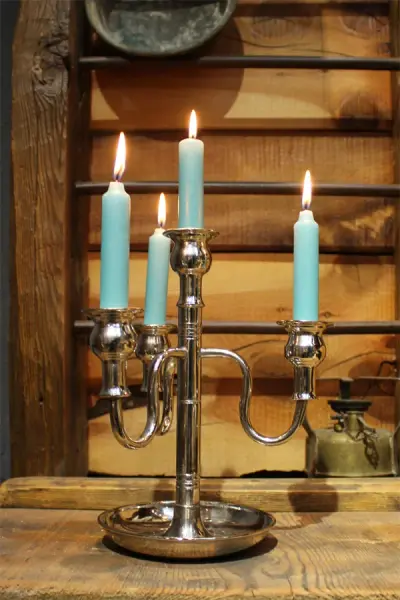
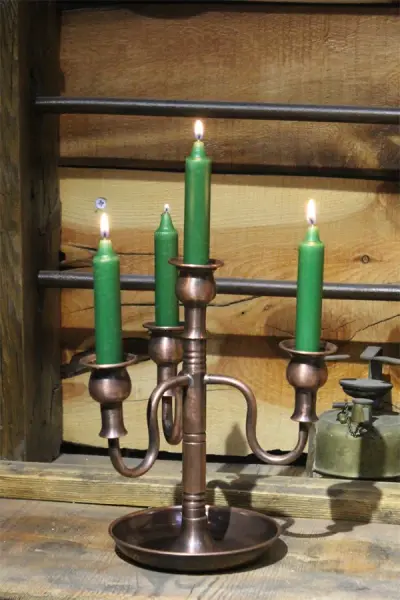
| Candle holders | Vintage, Alem, Elit holders, Vintage four-arm candlestick | 12 of 22 in stock | Display, check per model |
| Sugar bowls and candy dishes | Rumeli, Kafkas, Defne, Heybeli, Mini Güveç, Saka candy dish | 22 of 35 in stock | Entry and gift, check per model |
| Incense burners | Aromatherapy, hanging cauldron, hand-carried ritual burners | 13 of 19 in stock | Display, check per model |
| Vases | Güldane, Armağan, İrlanda, Sümbüllü | 4 of 9 in stock | Display, check per model |
What is not in stock deserves its own sentence, because for a buyer racing an opening date those models are the real risk. Among candle holders, the handled and antique-handle versions of the Alem and Elit series and the Alem chamberstick models are not shown in stock; in stock are the Vintage holder, the Vintage four-arm candlestick, the smooth Alem holder and the Elit pricket candle holder in red copper, nickel and antique. Most out-of-stock sugar bowl models are Saka candy dish sets of 2, 4 and 6, plus the 16 cm Heybeli. In incense burners the No. 1 and No. 2 cauldron models, and in vases the five Sümbüllü models, are not shown in stock.
The parent pages show each group on one screen: the copper home decor page lists all seven decor subcategories, and the storage page brings spice jars, pails and ice buckets together.
An entry piece is the small, light item through which a customer first pays for copper; a display piece is the larger item that draws the eye and defines the shelf, selling in smaller numbers. They do different jobs and should not be ordered in the same quantities.
| Role | Example pieces | Why it fits the role | Quantity logic |
|---|---|---|---|
| Entry | Saka candy dish 9 cm, Mini Güveç sugar bowl 7 cm, Bahar planter 8 cm, Tabbal dome spice jar | Small, roughly 68 to 130 g, easy to gift-wrap | Highest volume, frequent reorder |
| Mid-range | Safran spice jar set, Kabak planter set of 3, Rumeli sugar bowl, Vintage candle holder | Lidded or boxed set, complete as a gift | Medium volume, two or three finishes |
| Display | Mercan ice bucket 24 cm, Güldane vase, Vintage four-arm candlestick, Elit pail 17 cm | Visual weight on the shelf | Low volume, one or two finishes |
| Story | Kurnacı hammam bowl, hand-carried ritual incense burner | Sold through Turkish bath and ritual culture | Low volume, with an explanation card |
Hammam bowls and ritual incense burners sit on their own line because they sell on the culture they carry rather than on function. In a museum shop or a store in a tourist district they are the strongest narrative pieces. In a concept home store, planters and candle holders usually turn faster.
Spread finishes so that each model family offers a visible choice without ordering every model in every finish, which multiplies stock risk. The catalogue has four finishes: red copper (listed on product cards as polished copper), nickel (silver look), antique (listed as oxidised) and brushed matte. On the craft side, hand-hammered, hand-engraved and smooth bodies are listed as separate models.
Real availability shows why the plan has to be made per model. The Rumeli sugar bowl comes hand-hammered in red and nickel, and smooth in red, nickel and antique. The Kafkas bowl is hand-hammered in red and nickel, but smooth only in nickel. The Tabbal dome spice jar comes in red and nickel, the Safran jar in red and antique, both hand-hammered and hand-engraved. The in-stock smooth Alem and Elit candle holders come in red, nickel and antique. A decision such as "everything in antique" simply has no match in some families.
A workable sequence:
Sugar bowls, candy dishes and spice jars touch food; candle holders, planters, vases, incense burners and hammam bowls do not. On a gift shelf the distinction is easy to miss because the pieces share material, finishes and display space, but the buyer's labeling and documentation duties differ.
For food-contact pieces, confirm the interior surface at quote stage: the catalogue's specification tables give material, finish colour, thickness and dimensions, but no separate interior surface line. Unlined copper should not be in prolonged contact with acidic food, which is a general rule; dry treats such as sugar cubes or Turkish delight are a different use from pickles or citrus. At the point of sale that means a clear use note next to the product, for example "for dry treats".
The food-contact framework is the importer's side of the transaction and differs between the EU, the US, the UK and the Gulf. Which documents are asked for and what the label must say is mapped market by market in our food-contact copper compliance guide. The practical rule: keep food-contact items on separate lines from decor items in the quote list, and note the market you need documentation for.
A store selling copper planters should hand over a short care card with each piece, because the way copper changes with moisture and time looks like a defect to a customer but is how the metal behaves. Red copper darkens as it meets air, and a green patina can form in damp conditions. The antique finish starts with that aged look and shows further change less.
The planter interior is in constant contact with soil and water. The catalogue does not list an interior surface or a drainage hole for planters in the specification table, so ask both questions in the quote and write the care card from the answer. Many decor retailers position copper planters as cachepots for a plastic nursery pot, which keeps the copper out of standing water and lets the customer swap plants easily.
Four lines the card should carry:
For a fuller care routine and a do-not list by finish, see copper care and service life; the card text can be condensed from there.
Packaging for a gift assortment is two decisions: transport packaging that protects the product in transit, and retail packaging that presents it on the shelf. They do not have to be the same box and should be discussed as separate items in the quote.
In transit the risk for copper is denting and scuffing rather than breakage. A thin sugar bowl lid or a candle holder stem marks when it touches another piece inside a carton. Wrapping each piece individually, putting heavy pieces at the bottom and light ones on top, and marking cartons with the stock codes inside all speed up shelf preparation. The detail is in our export packaging and container plan.
On the retail side, ask: will each item be boxed individually, is there space on the box for your barcode or price label, do sets arrive in one box, and can a care card go inside. These are priced per order and confirmed in writing in the quote reply; the site does not promise a fixed packaging option.
Mixed cartons are a separate decision. A chain with several branches, or an importer distributing to retailers, may want each branch's assortment in its own carton, while a single store prefers cartons by family. Writing that preference in the quote note removes a re-sorting step in your warehouse.
A handmade story earns trust to the degree that it states how the item was actually made and what that gives the customer. Most models in the catalogue carry their craft type in the name: hand-hammered, hand-engraved or smooth. Where the name does not state it, ask in the quote. That is the base of your label copy.
On a hand-hammered body the hammer marks come from real hammering, and no two pieces are identical. A smooth body gives a cleaner, more repeatable surface. A hammered look does not always mean hammered work, since a pattern can also be pressed in; how to tell them apart is covered in hand-hammered or machine-pressed.
Three rules keep the story honest. State variation up front on hand-hammered pieces: "each piece is hammered by hand, so texture and tone vary slightly" reduces returns. Name the origin concretely: Kahramanmaraş, Turkey. And never present a smooth piece as hammered; the Bahar planter is smooth, the Kabak planter is hand-hammered, and the label should say so.
For online boutiques these rules matter even more, because the customer decides without touching the product. Red copper reads differently on screen and under store lights, and antique finishes can vary in depth from piece to piece. Saying on the product page that hand-hammered pieces vary and that colour deepens over time pre-empts the return from a customer who finds the delivered item different from the photo. Photographing samples under your own studio lighting keeps listing images consistent with what arrives.
How the acceptable variation band is agreed between buyer and supplier also matters. Sample approval defines it in writing before production; the steps are covered in our guide to sample orders and pre-production approval.
A copper gift assortment may not fall under a single tariff heading; classification can differ by product family. Copper table, kitchen and household articles are grouped under HS heading 7418, and sugar bowls and spice jars sit close to that description. Where ornamental pieces such as candle holders, vases, planters or incense burners fall depends on how the item is assessed, and this guide gives no code for them. Confirm the subheading and rate with your customs broker and your destination tariff; the cost lines for a landed cost calculation are in HS code and landed cost.
Market context also shapes the mix. EU buyers often ask whether the carbon border mechanism touches copper decor and what the packaging regulation requires of retail boxes; both are covered in CBAM and sustainability documents for EU buyers. For UK and US gift retailers, the hammam bowl and the hand-hammered planter earn their shelf space through a story of Turkish craft and bathing culture.
If you want your store brand on the pieces, that is a separate layer of decisions on surface, logo area and quantity, and it works best once the assortment is fixed, because feasibility can only be judged when the model, finish and quantity are known. The methods are covered in our guide to logo printing and engraving on copper.
Yes. Add models from different families to the quote list as separate lines and send it as one list. Whether a minimum applies per line or to the order total depends on the products and their stock status, and The Coppery states it in writing in the reply to that specific list. This guide does not quote a fixed threshold.
Carton layout is planned per order before dispatch. If you want variants packed separately, or one carton per store location, write that in the quote list note. The three finishes of a model then go straight to the right shelf or branch without being re-sorted in your warehouse.
Write the logo request in the quote list note. Feasibility depends on the surface, the available logo area and the quantity, and a hand-hammered body carries a mark differently from a smooth one. Our guide to logo printing and engraving on copper explains the methods and how setup cost spreads over quantity.
Add the models you want to see to the quote list and note that you need samples, with the finish and delivery address. For gift products the real job of a sample is to check colour, hammer texture and packaging under your own store lighting. Sample cost and any credit against the bulk order are stated in the reply.
Every product in this assortment is listed with copper as its material, and sheet thickness is given on the product page where measured, from 0.45 mm to 0.70 mm in the home decor group. Nickel and antique are surface finishes on a copper body, not a different base metal. Ask for the material statement in writing with your quote.
They can, but production terms and lead time for models not shown in stock are quoted separately. For a store with a fixed opening date, building the shelf backbone from fully stocked families and moving out-of-stock models to a second shipment keeps the launch independent of one item's production schedule.
The Coppery runs a wholesale catalogue without published prices. Price depends on model, finish, quantity, packaging and delivery terms, so it is calculated per order. Send your quote list by WhatsApp, email or form and you receive the wholesale price, minimum quantity, lead time and shipping terms in writing.
Other guides covering the same stage of the buying process - continue reading here.
Copper hammam bowl (hammam tas) wholesale from Turkey for spas and hotels: real sizes and finishes, sauna buckets, foot baths, wet-area care and a quote list.
Copper candle holders wholesale from Turkey: real stock codes, candle fit, finishes, wax care, fire safety and seasonal assortments for retail and hotel buyers.
How a logo is applied to copper, what the metal does to each method, and how tooling cost breaks even across order volume in corporate gift programmes.
Add the products you need to your quote list with quantities and send it by WhatsApp, e-mail or the form. We reply with unit prices and delivery terms.