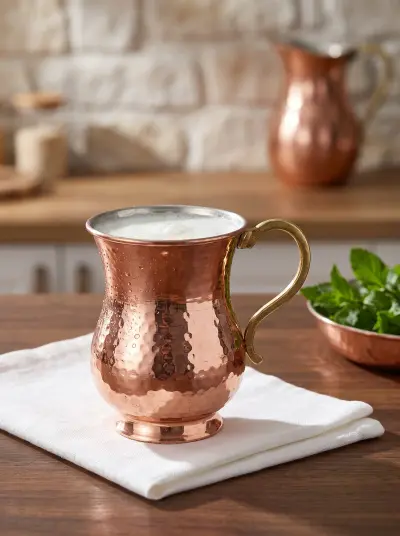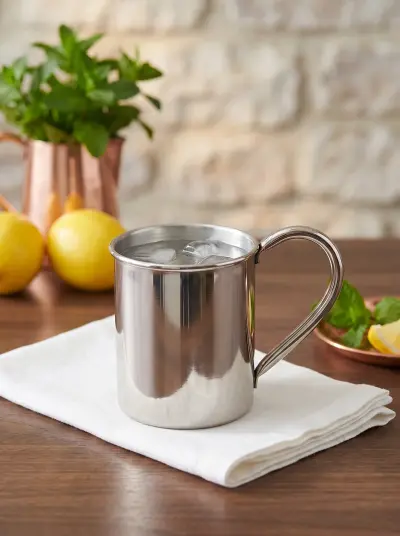
Lungo Copper Tumbler — 530 ml, smooth, polished copper
TC20020-1
Sourcing Turkish copper coffee pots and sets wholesale: sizing, tin lining, handle joints, stovetop compatibility and SKU planning before you send an RFQ.
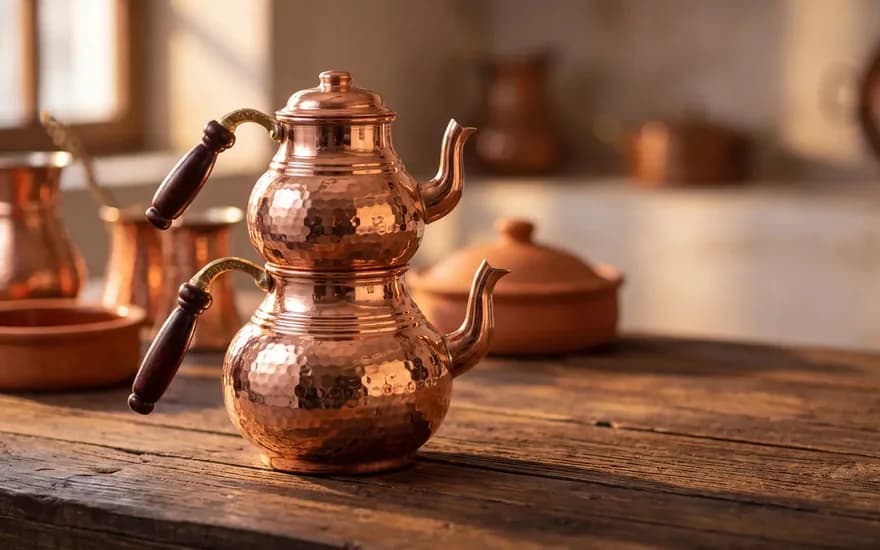
Browse the range, add the pieces you need to your quote list and ask for prices in one message. No account, no online prices.
Sourcing Turkish copper coffee pots wholesale comes down to four technical decisions that set both price and service life: brim volume, continuity of the tin lining, how the handle is joined, and the forming method. Gaziantep offers catalogue breadth and full sets; Trabzon concentrates on traditional forms and tinning. Sampling measures all four at once.
Cezve sizes are quoted in cups by habit. In wholesale that phrase is useless, because a "three cup" pot means a different millilitre figure in every workshop, and two quotations that look like the same product are in fact pricing different items.
Specify two numbers instead. A Turkish coffee cup typically holds 60 to 80 ml. The brew foams as it rises, so the pot is never filled to the rim; usable volume is roughly two thirds of brim capacity. From those two facts you can derive the volume of every line item yourself instead of inheriting a supplier assumption.
Two dimensions govern the form. The first is body taper: a narrow base with a wider mouth concentrates heat at the bottom and gives the foam somewhere to rise. The second is the spout. A shallow spout lets coffee run back down the outside of the body and drip under the cup; an over cut spout makes pour rate hard to control.
| Serving count | Brim volume | Usable volume | Typical use |
|---|---|---|---|
| 1 cup | 100 to 150 ml | 70 to 100 ml | Single service, in room |
| 2 cups | 200 to 260 ml | 130 to 175 ml | Coffee shop standard |
| 3 to 4 cups | 330 to 420 ml | 220 to 280 ml | Restaurant table service |
| 5 cups and up | 500 ml and up | 330 ml and up | Breakfast and banquet |
Treat the table as the arithmetic, not as a factory standard. Put your own target figure in the specification and verify it on the sample.
Coffee is acidic. Brewed in bare copper it causes metal transfer, and taste is affected as well. Lining the interior with tin is therefore not a decorative choice; it is the layer that makes the product work.
When you assess a lining, the surface you inspect is not the middle of the wall. Two zones matter. The first is the corner where the wall meets the base: if the lining does not run continuously into that corner, wear starts there and bare copper eventually meets the brew. The second is the rim and the inside of the spout, where liquid rubs against the wall on every pour. Hold the sample to the light and inspect both zones separately.
Tin melts at roughly 232 degrees Celsius. With water and coffee inside, liquid temperature stays around 100 degrees Celsius, so the lining is not at risk during normal brewing. The real hazard is an empty pot left on heat, which in a busy service will happen eventually. Printing that warning on the care card of wholesale goods measurably reduces the complaints that come back later.
The renewability of the lining is copper's commercial advantage: a worn pot is re tinned, not scrapped. Tin lining care covers inspection and renewal in detail. Write into the supply agreement who carries the cost of re tinning, especially for chain accounts.
The forming method drives both cost and lead time. Four methods are common and most workshops combine them.
Forging works the sheet under a hammer at the bench. The body work hardens and the surface carries a texture that never repeats. Hammering as a decorative pass is applied after the shape exists and should not be confused with forging; say explicitly which you mean in the RFQ. Stamping forms the part in a die, so parts are identical and unit labour falls as volume rises. Spinning shapes the body over a rotating former and gives a smooth, symmetrical wall.
For a buyer the decision reduces to one question: what are you selling the pot as. Twenty pots side by side on a retail shelf need to look identical, and the value there is repeatability. A pot the guest sees in an open kitchen, finds in a boutique hotel room, or receives as a gift carries value in exactly the opposite property, the texture that does not repeat. Trying to satisfy both with one forming method produces a product that satisfies neither.
Handwork costs calendar time as well as money, because every piece occupies a bench. Quantity, price and lead time are covered together in the MOQ, price and lead time guide.
The part that fails on a cezve is almost never the body. It is the handle, because the joint sits at the end of a lever and takes lifting load on every use.
Handle material is one of three. Wood insulates best and is comfortable in the hand, but it will not go through a dishwasher and dries out over time. Brass is durable and sits well against copper visually, but it conducts heat; on long handles that is irrelevant, on short ones it means a cloth. A copper handle gives visual unity and conducts the most heat of the three.
The joint itself is riveted or welded. A riveted joint can be opened, which means a loose or broken handle is a repair rather than a write off. A welded joint looks cleaner but does not offer the same option. If you are selling to a chain, repairability lowers total cost of ownership, and that is a concrete argument for a procurement desk.
Pour behaviour can only be judged on a physical sample. Fill it with water and pour at two speeds, slow and fast. If liquid runs back along the outside, the spout angle is wrong, and in production that fault repeats on every unit.
Copper conducts heat quickly, which is exactly the behaviour a cezve needs. The heat source, however, limits which customers a given pot can be sold to.
On gas the classic conical body works without qualification, because flame reaches the base and the lower wall. On an electric plate heat only enters through the base, so base diameter becomes important: a very narrow base makes poor contact and heats slowly. If you are selling into electric kitchens, put base diameter in the specification.
Sand brewing is common in traditional coffee houses and creates its own requirement. The pot is buried, so the outer wall is in constant contact with hot sand; the handle joint must tolerate that repeated heat and a wooden handle should not start too close to the body. Tell the workshop you are specifying for sand and it will propose a different handle geometry.
Induction is the hard limit. Copper is not magnetic, so a plain copper pot does not heat on induction at all. It needs a bonded magnetic steel base, which requires a wider base and therefore compromises the classic conical shape. Raise this in the first quotation round; it is not a detail to resolve after sampling.
Copper oxidises and darkens. That is metal behaviour, not a defect, but in wholesale it turns into a complaint whenever it was never agreed: the shelf unit no longer matches the catalogue photograph six months later and the customer reads that as a quality failure.
Finish is therefore its own line in the specification. A bright polished finish performs in retail and gift channels but marks with every touch and demands regular polishing. A matt or brushed finish hides marks and needs less maintenance in high volume service. An antiqued or oxidised finish accepts the darkening up front, so it changes least over time.
Whether the exterior is lacquered is a separate question. Lacquer preserves shine but is a poor match for a vessel that meets direct heat: on a stovetop pot it discolours or lifts over time. Decorative and service versions of the same shape should not share one SKU for this reason.
The most practical protection is to attach a photograph of the approved sample, with a written finish description, to the contract. The conversation when production lands is then anchored to an object rather than to memory.
Copper coffee goods are usually sold as combinations rather than single pieces: pot, cup holders, tray, sugar bowl. That is both an opportunity and a trap.
The opportunity is straightforward. A set carries a higher average basket value than a single pot, and it is the natural unit in the gift channel. The trap is finish. A pot from one workshop and a tray from another will differ in polish, patina and edge work, and side by side the mismatch reads as cheapness. Commissioning the whole set from one workshop against one specification is safer than assembling it piece by piece.
The common SKU mistake is opening the set as a single code. The correct structure gives every component its own code and builds the set as a separate code composed of them. A broken cup holder can then be replenished alone, components can be sold outside the set, and stock counts reconcile. The cezve and coffee set groups already carry that distinction.
This guide stops at the coffee line. Gulf hospitality items that have no ready catalogue category follow a different route entirely: the dallah (دلة), the Arabic coffee pot with its long curved spout and lid, is not a cezve, and the copper breakfast set and bespoke-size kabsa trays follow their own route too. Those forms are not ordered from a catalogue; they are made to a custom size or under contract manufacturing. The incense burner is different: it has its own catalogue category, copper incense burners, covered in the wholesale mabkhara and incense burner guide. That route is set out in the Gulf copper serveware sourcing guide.
Plan the component ratio as well. In a coffee shop the pot outlives the cups and the tray outlives everything. Lock the set to a fixed ratio and you accumulate trays while cups run out. Ordering by component on repeat depends on the SKU structure you set up on the first order.
Copper takes surface work well, which makes the cezve a natural carrier for a branded programme. Three methods are common and their quantity logic differs.
Hand engraving is a craftsman cutting the surface with a graver. It needs no tooling and works on very small runs, but unit labour is high and no two pieces are exactly alike. Die embossing presses the mark into the surface; tooling is made once and its cost divides across the order, so it sets a real quantity threshold. Laser and chemical surface processes give fine detail but are not available in every workshop.
The rule of thumb: engraving for small or rotating runs, die embossing for repeating volume. Tooling ownership is a separate negotiation. If you pay for the die, the contract should state whether it belongs to you or to the workshop and whether it can be moved elsewhere. Without that clause, changing supplier means paying for tooling twice.
Placement is technical too. A flat logo pressed onto a conical wall lands on a curve and its proportions shift. Send artwork as vectors and approve placement photographically on the first sample. Branded programmes sit under private-label production.
Leave none of these eight fields blank: brim volume, interior lining and its continuity into the base corner, handle material, joint type, forming method, exterior finish, branding method, and packing. Quotations received without them describe different products and cannot be compared.
On regions, two clusters matter here. Gaziantep is strong on catalogue breadth and set consistency, and is where contract and private-label work finds the most capacity. Trabzon is known for traditional forms and a living tinning trade, which usually produces clearer answers on lining thickness and renewal.
Copper is heavy and soft against impact, so packing is part of the specification rather than an afterthought; export packing and container loading lists what to agree before shipment. When the specification is complete, add the pieces to the quote list and send it with the specification by WhatsApp, e-mail or the form.
They are safe when the interior is tin lined and the lining stays continuous. Coffee is acidic, so brewing in bare copper causes metal transfer and affects taste. Tin melts at roughly 232 degrees Celsius, well above the boiling liquid inside, so the lining is not at risk during normal brewing. The real risk is heating an empty pot.
Give millilitres, not cup counts. A Turkish coffee cup typically holds 60 to 80 ml, and the pot is never filled to the rim because the brew foams up, so usable volume is roughly two thirds of brim capacity. State brim volume and target serving count as two separate fields, otherwise each workshop quotes against its own assumption.
A forged body is worked from sheet by hammer, which work hardens the metal and leaves a texture that never repeats. Stamping uses a die, so parts are identical and unit labour falls as volume rises. Retail shelf programmes usually want repeatability. Open kitchens, boutique hotels and gift channels usually want the forged texture.
No, not on their own. Copper is not magnetic, so a plain copper pot will not heat on induction. It needs a bonded magnetic steel disc on the base, which forces a wider base and changes the classic conical shape. If your customers run induction kitchens, raise it in the first quotation round rather than after sampling.
It depends on the branding method rather than the pot. Hand engraving needs no tooling and can be done on very small runs, but unit labour is high. Die embossing spreads a one time tooling cost across the order, so it sets a real quantity threshold. Ask the workshop to quote both methods against your actual volume.
Wholesale sets are usually built from a cezve, cup holders or zarf, a tray and a sugar bowl. The trap is finish consistency: parts sourced from different workshops rarely match in polish and patina, and the mismatch is visible on a shelf. Commissioning the whole set from one workshop against one specification avoids it.
It depends on usage intensity and handling rather than on a fixed interval. A pot in a busy coffee shop will need re-tinning far sooner than one used for room service. The important point commercially is that lining is renewable, so a worn pot is refurbished rather than scrapped. Decide in the contract who carries that cost.
Gaziantep in southeastern Turkey carries the broadest catalogue and is the natural choice when you want the pot, tray and sugar bowl produced under one roof with one finish. Trabzon on the Black Sea coast is known for traditional forms and a living tinning trade, which usually means clearer answers on lining.
Other guides covering the same stage of the buying process - continue reading here.
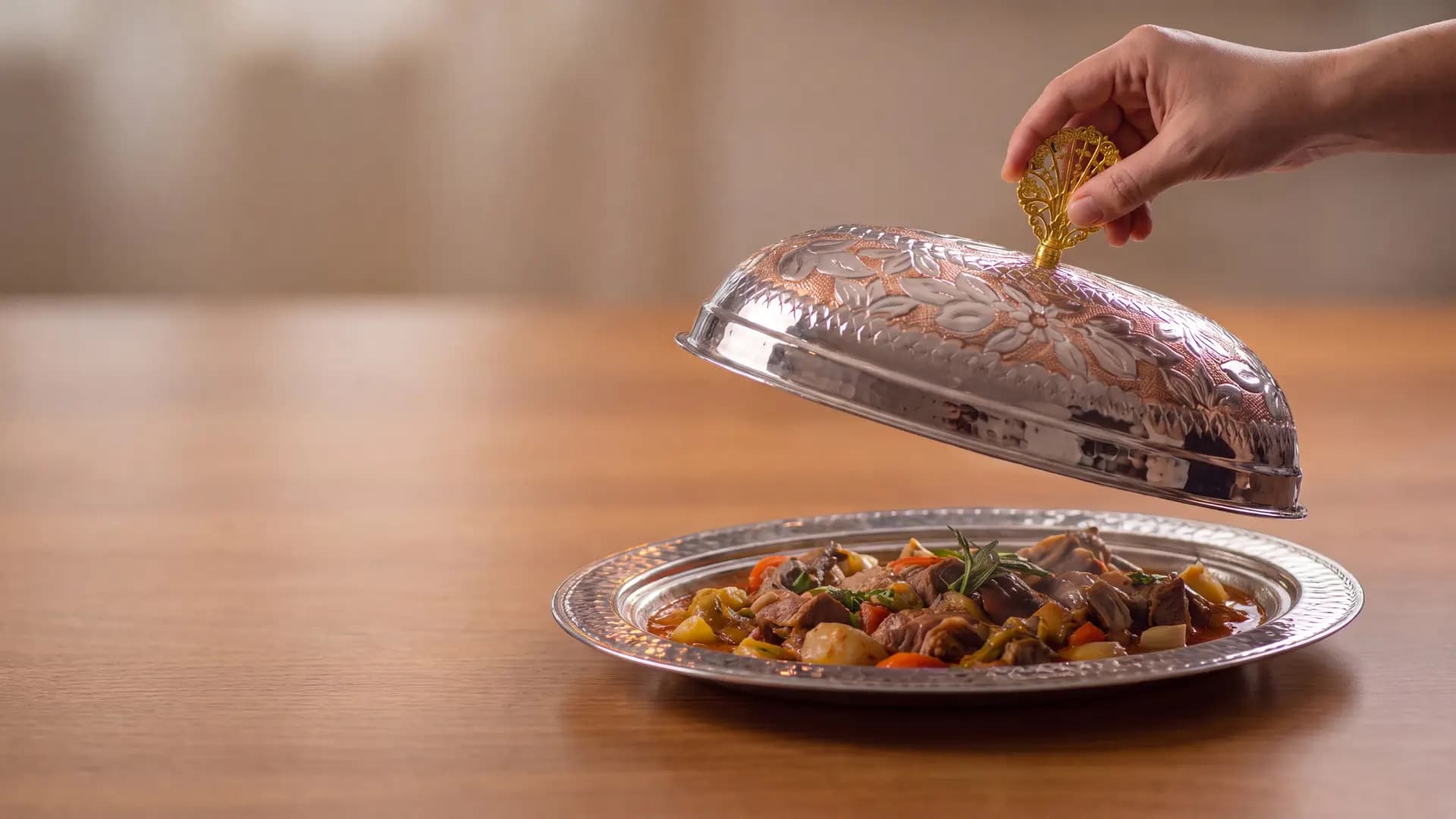
Sourcing copper serveware for Gulf hospitality: dallah coffee pots, kabsa trays and custom OEM forms, with gauge, lining and Saudi, UAE, Egypt compliance notes.
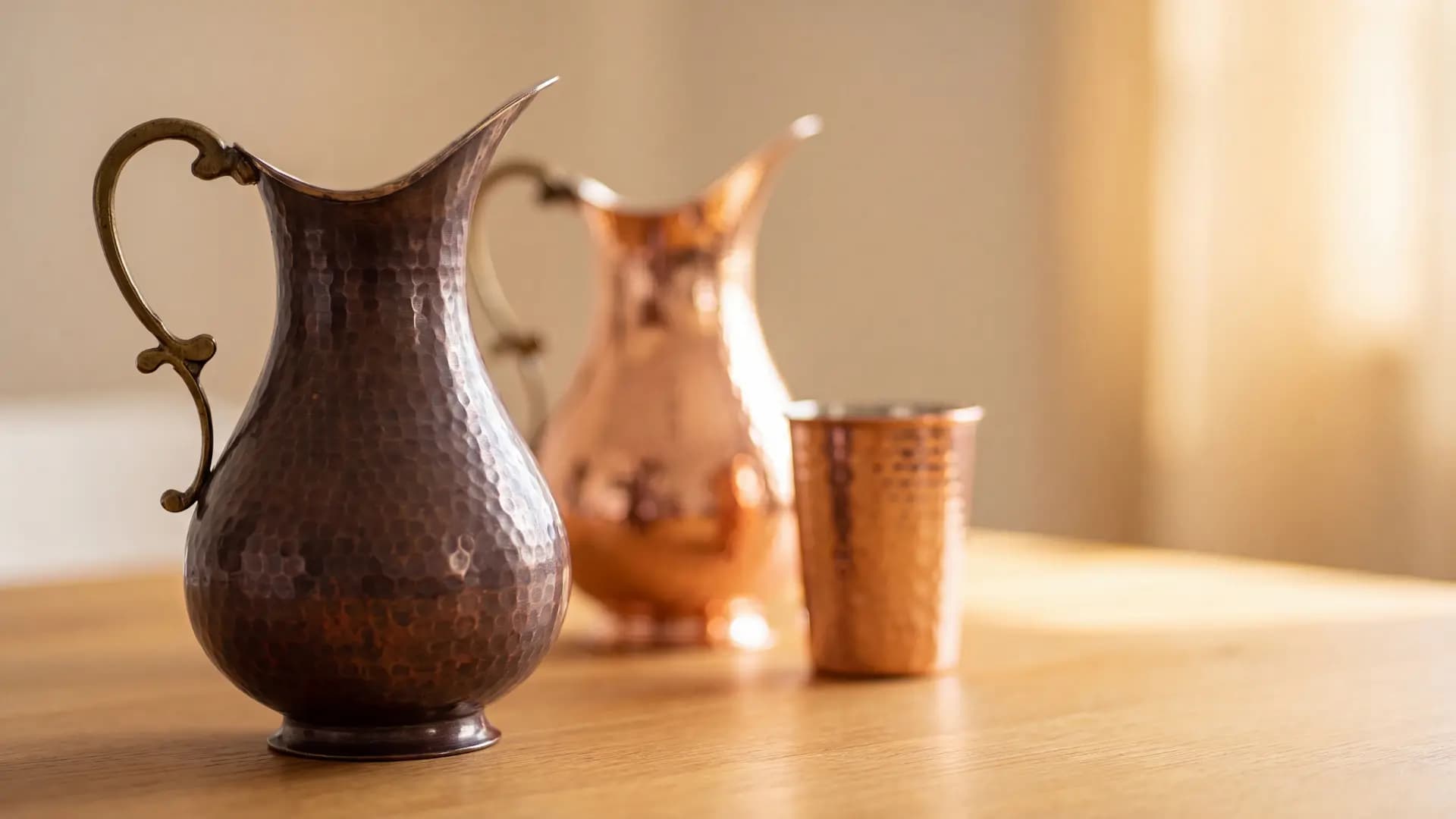
Wholesale copper water pitchers for restaurants: capacity per table, spout and handle, solid vs plated, lining for lemon water, finish, care and quantities.
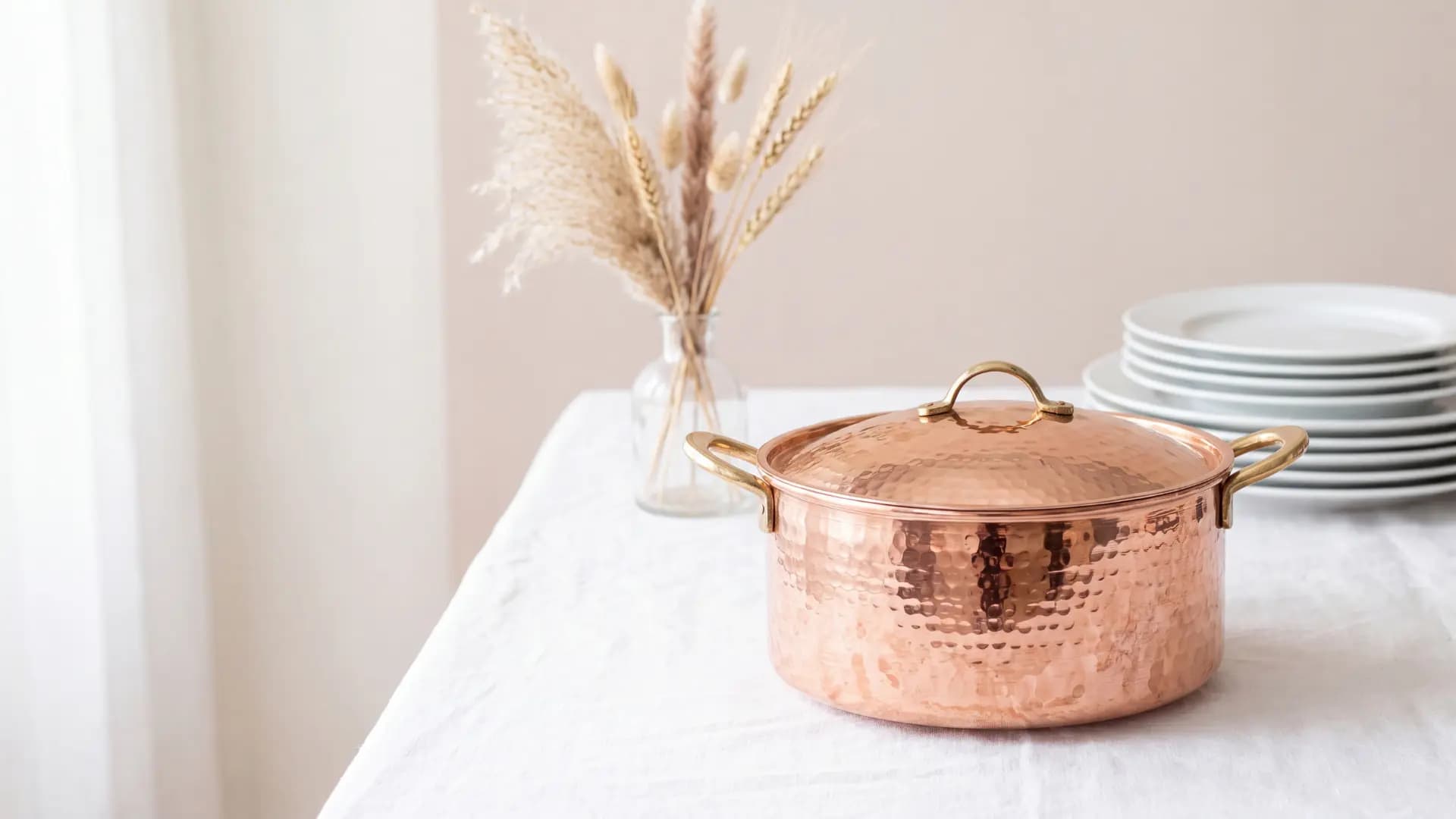
How to plan a first mixed wholesale copper order from Turkey: choosing a trial range, reading stock codes, setting quantities and writing a quote request.
Add the products you need to your quote list with quantities and send it by WhatsApp, e-mail or the form. We reply with unit prices and delivery terms.