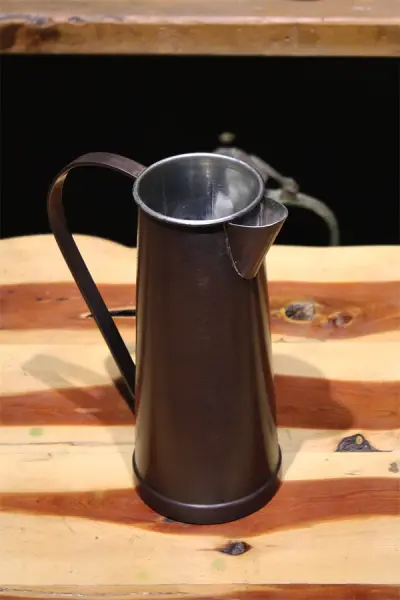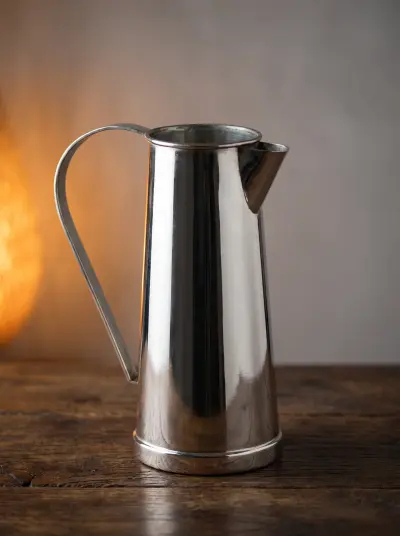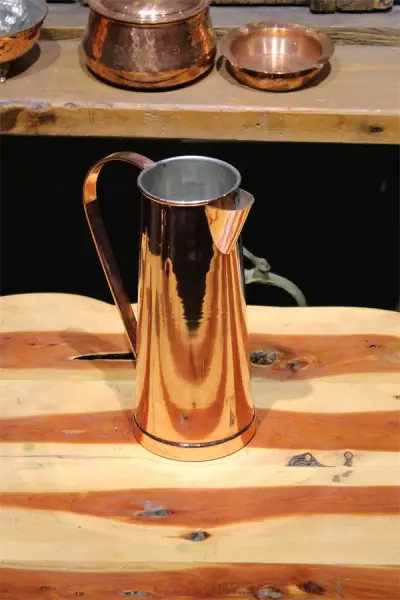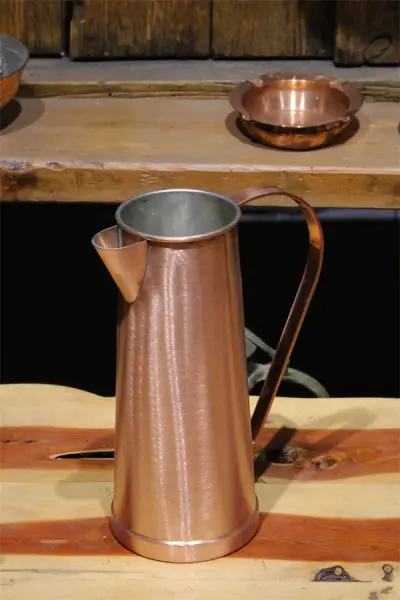
London Copper Pitcher — brushed matt
TC30079-4
Wholesale copper water pitchers for restaurants: capacity per table, spout and handle, solid vs plated, lining for lemon water, finish, care and quantities.
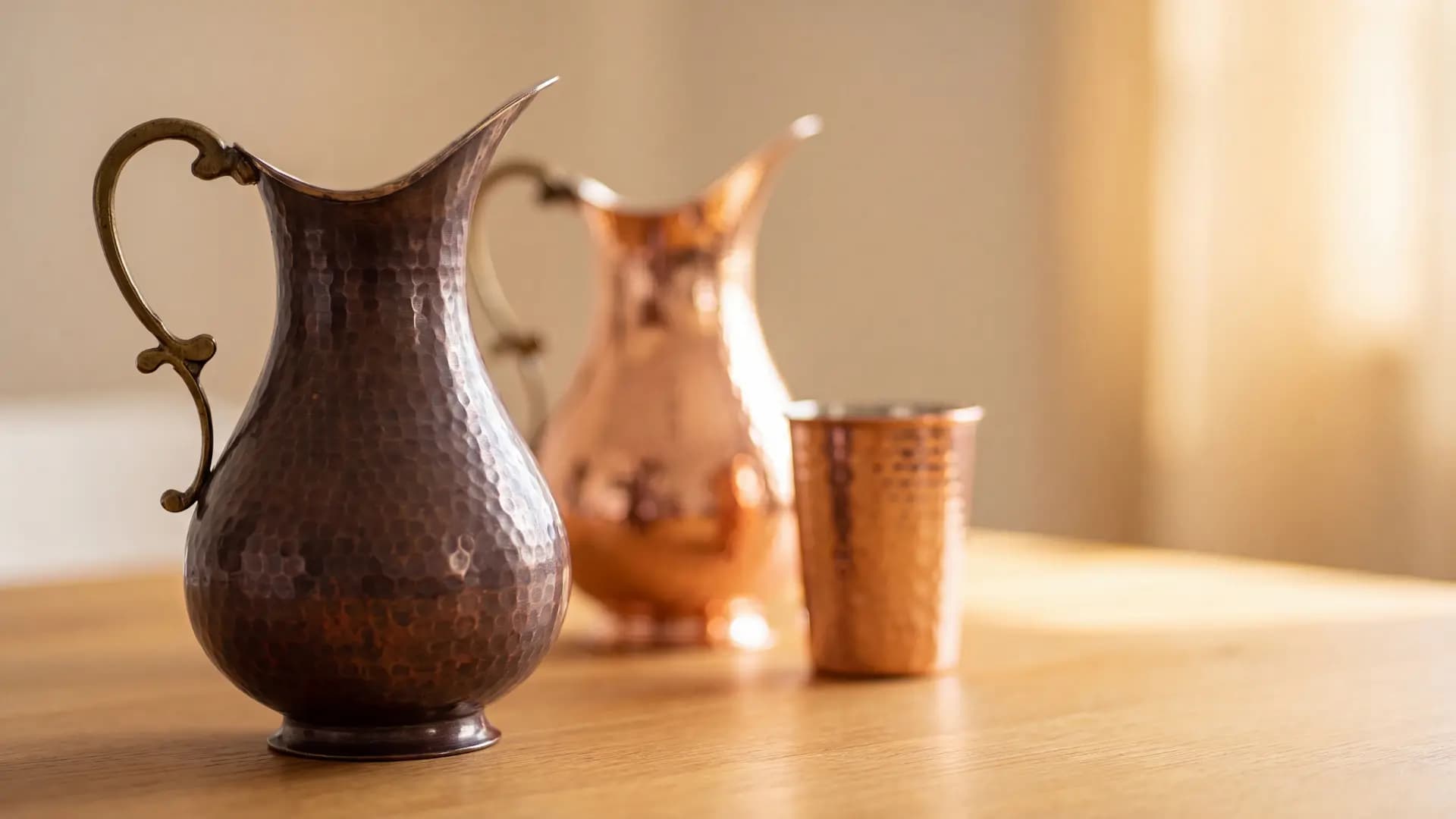
Browse the range, add the pieces you need to your quote list and ask for prices in one message. No account, no online prices.
Choose copper water pitchers by table size: about 1000-1400 ml for two- and four-tops, 2000 ml for four to six covers, 2500 ml for large tables and water stations. Specify a solid copper body, a lined interior if lemon water, juice or ayran is poured, and a finish your team can maintain, then send stock codes for a written quote.
A two-top needs a 1000-1150 ml pitcher, a four-top 1400 ml, a four- to six-top 2000 ml, and a large table or water station 2500 ml, sized to fill every glass in one round at a working fill rather than brim-full. A listed capacity is the volume to the rim; in service a pitcher is filled to below the spout so it can be carried and poured without spilling, which leaves noticeably less than the label.
The catalogue's copper pitchers and jugs range runs to 35 listings across nine listed capacities as of November 2026, from a 500 ml jug to a 2500 ml pitcher. The table groups the main ones by capacity, with the wall thickness and weight stated in each listing.
| Capacity | Catalogue examples | Wall and weight | Typical use |
|---|---|---|---|
| 500 ml | Kadife milk jug TC30064-1 | 0.50 mm, 230 g | One or two guests, milk for tea and coffee |
| 1000-1150 ml | Maraş No. 1 TC30072-1 and TC30077-1, Hanımeli jug TC30065-1 | 0.60-0.80 mm, 370-480 g | Two-tops, bar counters, room service trays |
| 1400 ml | Antalya No. 1 TC30068-1 and TC30069-1, Antalya Fluted TC30071-1 | 0.70-0.80 mm, 500 g | Four-tops, terrace tables |
| 2000 ml | London TC30079-1, Pınar No. 2 TC30075-1, Maraş No. 2 TC30073-1, Penguin TC30076-1 | 0.70-1.20 mm, 780-850 g | Four- to six-tops |
| 2500 ml | Antalya No. 2 TC30070-1 | 0.80 mm, 660 g | Large tables, water stations, buffets |
Two details in the data are worth reading before you choose. First, weight in service is the pitcher plus its contents: a 2000 ml pitcher at 850 g carries close to 2.85 kg when filled to the brim, and a server pouring around a six-top lifts that weight with one wrist, many times a shift. The 1400 ml pitchers, at 500 g empty, are far easier on staff for tables that need frequent refills. Second, the London pitcher is listed at 2000 ml in polished copper, nickel-plated and oxidised (TC30079-1, -2, -3), but the brushed matt version TC30079-4 shows 1800 ml (catalogue data, November 2026) for the same 26.5 cm height and 9 cm diameter. Treat that as a question for the written quote rather than a real difference you can plan around.
A simple sizing rule: count the glasses on the table, multiply by the pour you serve, and pick the smallest pitcher that covers one full round at a working fill. If the answer lands between sizes, the smaller pitcher with a second on the side station usually serves better than one heavy pitcher.
Shape decides how the pitcher pours, how stable it stands and how much room it takes. A tall, narrow body saves table space; a rounded belly holds more for its height and stands steadier; a deep, pinched spout pours a cleaner stream and drips less than a short open lip.
The catalogue covers both families. The London pitcher is a straight cylinder, 26.5 cm tall and only 9 cm across, with a copper strap handle and a short angled spout; it suits narrow tables, banquet rounds crowded with glassware and bar counters. The Pınar, Antalya and Maraş pitchers are traditional bellied shapes with a long pouring lip and, in the product photos, a handle that looks like a separate cast part in the product photos. The Antalya Fluted pitcher (TC30071-1) has horizontal ribs that catch light and help grip. Ask for the handle material per stock code in the quote, because a cast handle and a strap handle wear differently and the listings do not name the alloy.
The pitcher listings describe capacity, thickness, weight and finish and do not mention lids, so plan on open pitchers unless the written quote says otherwise. A lid matters on terraces, poolsides and buffets, where insects and dust reach the water, and on room service trays that travel through corridors. If you need one, say so per stock code in your quote request and ask whether a lid can be supplied for that model; do not assume a lid fits a pitcher it was not made for.
You tell solid copper from copper-plated by three checks on a sample: weight against the listed figure, a magnet test, and the colour at the rim, spout and base where plating wears through first. A plated pitcher is a steel or stainless body with a thin copper skin; write "solid copper, X mm wall" into the specification so the quote cannot be read two ways.
Plated pitchers are a legitimate, cheaper product. The problem is a quote that says copper pitcher without saying what the body is made of. The pieces in this catalogue are listed with copper as the material, and the nickel-plated versions (suffix -2) are copper bodies with a silver-toned nickel surface, which is different again from copper-plated steel; which surfaces the nickel covers is a question for the written quote. Unambiguous wording you can paste straight into a request is in how to write solid copper into a specification.
Three checks separate them on a sample:
For plain still water, no: water is not acidic, and an unlined copper pitcher is a standard water vessel. The moment the menu puts lemon water, fruit-infused water, juice, lemonade, sangria or ayran into the same pitcher, the interior must be lined, because copper reacts with acidic drinks.
The rule buyers supplying US venues will meet is the US FDA Food Code (2022 edition), section 4-101.14(A), which does not allow copper or copper alloys such as brass to contact food or drink with a pH below 6, naming vinegar, fruit juice and wine. The same paragraph also bars copper fittings or tubing between a backflow prevention device and a carbonator. The background, and what US inspectors expect, is in why US food codes require tin-lined copper. Other markets have their own rules; treat this as a map, not legal advice.
| Drink poured | Acidic | Interior to specify |
|---|---|---|
| Still water, chilled or room temperature | No | Unlined acceptable |
| Sparkling water | Yes, carbonic acid from dissolved carbon dioxide | Tin-lined or stainless-lined |
| Lemon, cucumber-lime or fruit-infused water | Yes, once citrus or fruit goes in | Tin-lined or stainless-lined |
| Juice, lemonade, iced tea with lemon | Yes | Tin-lined or stainless-lined |
| Sangria, wine | Yes | Tin-lined or stainless-lined |
| Ayran, the salted Turkish yogurt drink | Yes, fermented and sour | Tin-lined or stainless-lined |
The catalogue listings do not carry a lining field, and a silver-coloured interior in a product photo is not a specification. Ask for the interior of every pitcher per stock code in the written quote, and accept one of three answers only: tin-lined, stainless-lined or unlined. Nickel and lacquer are surface finishes, not food-contact linings. Tin and stainless each have trade-offs: tin is the traditional lining and can be renewed, stainless lasts longer but cannot be retinned. The comparison is set out in tin vs stainless lining.
An operational rule matters as much as the lining. If you buy unlined pitchers for water, the house rule has to say so, and every server has to know that lemon slices never go into them. Many restaurants solve this by buying two lines: unlined pitchers for still water on the tables, lined pitchers in a different design for juice, lemonade or ayran service, so nobody can confuse them. Hot drinks are a separate programme: tea belongs in vessels built for heat, as set out in wholesale Turkish tea sets, and coffee service in Turkish coffee shop copper equipment.
Water service is hard on bright copper. Condensation, hard-water spots, wet hands and constant handling all mark the surface, so choose the finish by the polishing time your team actually has: polished copper looks best and tarnishes fastest, while oxidised, brushed matt and nickel-plated finishes keep a steady look with less work.
| Finish | Suffix | Look on the table | Care load |
|---|---|---|---|
| Polished copper | -1 | Bright red-gold, shows fingerprints and water spots | High, scheduled polishing |
| Nickel-plated | -2 | Silver tone, steady colour | Low to medium, soft cloth |
| Oxidised | -3 | Dark antique tone, hides marks | Low, no polishing |
| Brushed matt | -4 (London pitcher only) | Soft sheen | Low to medium |
Hand hammering is a finish decision in its own right. The hand-hammered Antalya (TC30069-1, TC30070-1), Pınar (TC30075-1) and Maraş (TC30077-1, TC30073-1) pitchers, and the hand-engraved Maraş (TC30072-1, TC30074-1) and Penguin (TC30076-1), break up reflections, so spots and light scratches show far less than on the smooth London pitcher or the smooth Antalya No. 1 (TC30068-1). For high-volume dining rooms, hammered polished copper or any oxidised piece is the forgiving choice; smooth polished copper rewards venues with a dedicated polishing routine.
Finishes do not convert in service. An oxidised pitcher will not return to bright copper without refinishing, and polishing a lacquered or nickel-plated surface damages it. Decide the finish per line at the start, and if you buy for several outlets, keep one finish per outlet so spares remain interchangeable.
Hand wash, dry at once and store empty. Copper pitchers do not belong in a commercial dishwasher: alkaline detergents and high rinse temperatures darken and spot the surface and shorten the life of any lining or exterior coating.
A routine that works in restaurant dishrooms:
Polishing intervals, retinning and what wears out first are covered in copper care and service life. Share that page with the dishroom team when the pitchers arrive; most finish damage happens in the first weeks, before the routine is set.
Size the order from tables, not covers, then add the pitchers that are being washed and a reserve for dents and loss. Copper pitchers rarely break, but they dent when dropped, lose their finish in the wrong wash and leave with guests in hotels, so the reserve is real.
A working method, with every number replaced by your own counts:
A worked example under stated assumptions: a 120-cover dining room with 30 tables puts 30 pitchers on tables at peak. If about a quarter of that number is in the wash cycle at any moment, add 8. A 10 % reserve on 38 adds 4, giving 42 pitchers. The assumptions are illustrative; your own counts after the first month of service will show the real attrition and the second order should follow them.
The pitcher and the glass should be specified together, because the pour arithmetic connects them. A 2000 ml pitcher filled to about 1600 ml pours five 300 ml servings, which suits a five- or six-top using a 330 ml copper tumbler such as TC20011-1. A 1400 ml pitcher at about 1100 ml pours three to four servings, a better match for two- and four-tops. Keep the tumbler finish the same as the pitcher on each table.
Tumbler capacities, wall thicknesses and the lining question for glasses are covered in wholesale copper water tumblers, and the range sits in copper cups and tumblers within the wider copper drinkware group. Turkish and Middle Eastern restaurants that serve ayran in bowls can pair a lined pitcher with copper ayran bowls such as the Pınarbaşı 500 ml bowl TC20032-1, 12.1 cm across; the complete table setting for those venues is in the Middle Eastern restaurant copper checklist.
A copper pitcher quote request lists one line per stock code with capacity, body (solid copper, wall in mm), interior (tin-lined, stainless-lined or unlined), finish suffix, lid yes/no and quantity. Order samples of every line before the main order, approve them in writing, and keep the approved samples as the reference for production and future reorders.
Samples are worth the time for pitchers in particular, because pour, drip and balance only show up in use. Order one of each candidate model in the finish you intend to use, run them through a real service and your dishroom for a week, and check the weight against the listing. If branding is planned, add a branded sample to that round; methods and proofs are covered in the copper logo and engraving guide.
Pitchers are rarely bought alone. Hotels usually include them in an opening order with plates, trays and ice buckets, the approach described in hotel OS&E copper procurement; bars pair them with goblets and ice buckets, as in the wholesale copper barware guide. Restaurants and hotels buying several groups at once can see how a combined consignment works on the HORECA copper equipment sourcing page. If this is your first order from Turkey, the first wholesale copper order guide walks through the sequence from quote to delivery.
Plain water does not react with copper the way acidic drinks do, so the contact itself is not the concern. The practical problems are hygiene and appearance: standing water leaves mineral rings inside, and a pitcher stored full in a cold room sweats and spots on the outside. Restaurants get the best life from copper by emptying, washing and drying pitchers at close and refilling them at service.
A copper pitcher suits cold and room-temperature service best. Copper carries heat straight into the body and handle, so a pitcher of hot water soon becomes hard to hold and pour safely, and brewed tea is itself mildly acidic, commonly around pH 5. For hot drinks, use a vessel built for heat, such as a teapot or double teapot, and confirm its interior per stock code in the written quote.
Yes. A pitcher body offers a broad, gently curved area that suits a logo better than a small cup does. Place the mark on the side guests see while the pitcher is poured, clear of the spout and the handle joint, and choose the method by finish and quantity as you would for any copper piece. Approve size and position on a branded sample, then keep the artwork file on record for reorders.
Record the full stock code of every line, including the finish suffix, so a polished Pınar pitcher is reordered as TC30075-1 and not as the nickel-plated or oxidised version. Keep one approved pitcher from the first delivery as the colour and texture reference, because hand-hammered pieces vary slightly by nature. Send a photo of it with the reorder so the new batch can be matched.
Yes, as long as each table setting is consistent. A common approach is hammered pitchers in the dining room, where they are seen up close, and smooth pitchers on the terrace or in banquets, where speed of polishing matters more. What looks careless is two different pitcher designs on one table, so assign one line per area and keep the spare stock separate.
Copper does not break, so export packing protects against dents to the body and spout and scratches to the finish. Each pitcher is usually wrapped individually and boxed so spouts and handles cannot knock against each other. Ask in the written quote how pitchers are packed, how many go in each carton, and the packed weight and volume, because freight is quoted on those figures.
Other guides covering the same stage of the buying process - continue reading here.
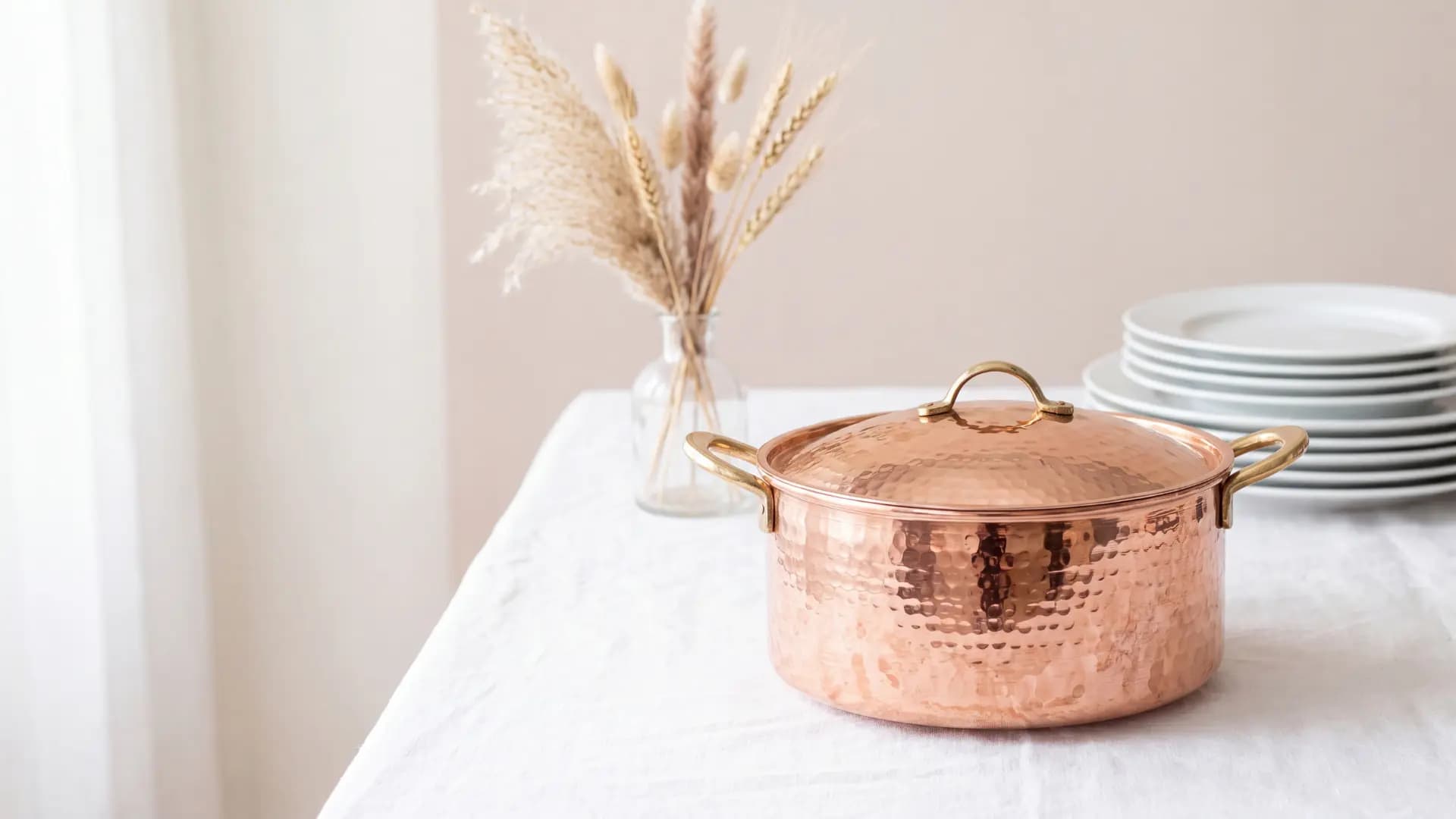
How to plan a first mixed wholesale copper order from Turkey: choosing a trial range, reading stock codes, setting quantities and writing a quote request.
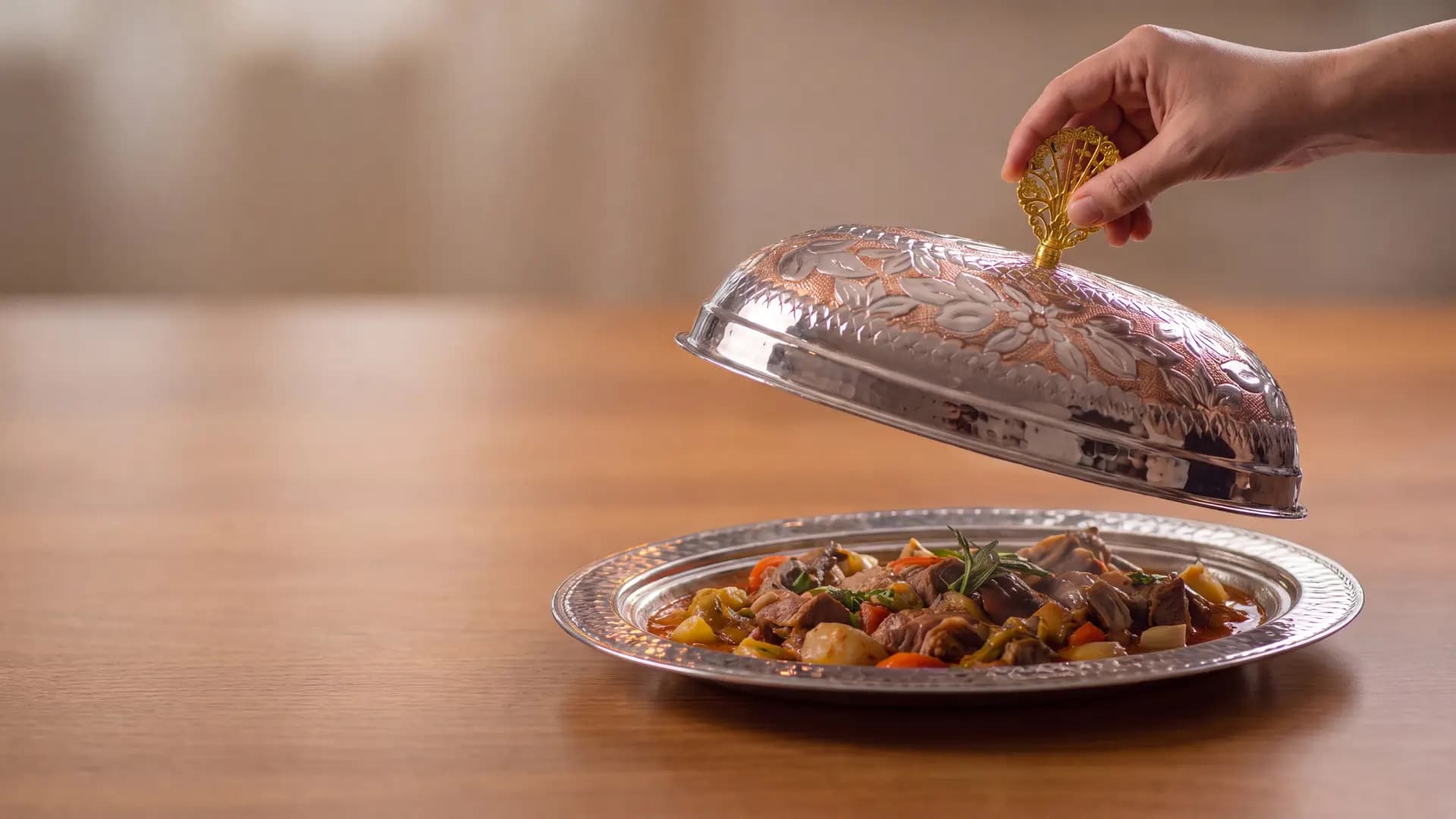
How to put copper tableware on a hotel OS&E list: outlet mapping, par level method, spec sheet fields, samples, outlet labelling and the retinning lifecycle.
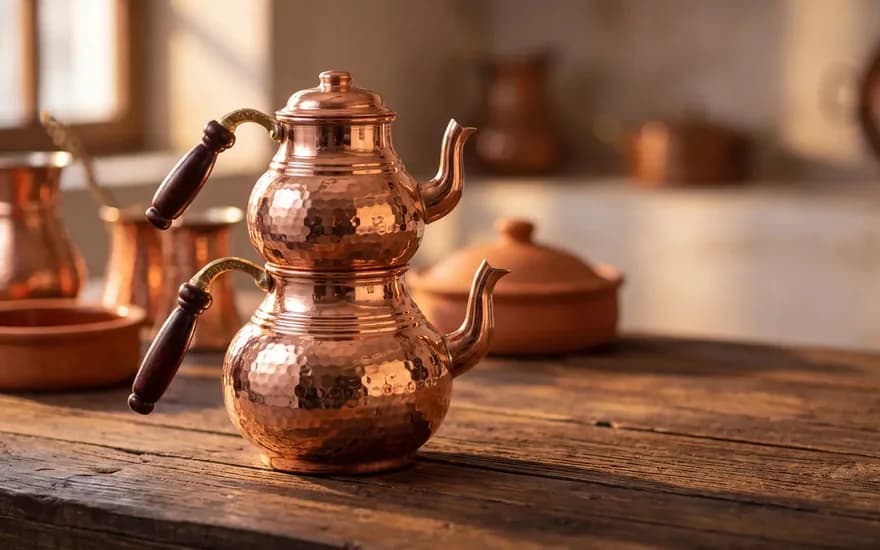
Sourcing Turkish copper coffee pots and sets wholesale: sizing, tin lining, handle joints, stovetop compatibility and SKU planning before you send an RFQ.
Add the products you need to your quote list with quantities and send it by WhatsApp, e-mail or the form. We reply with unit prices and delivery terms.