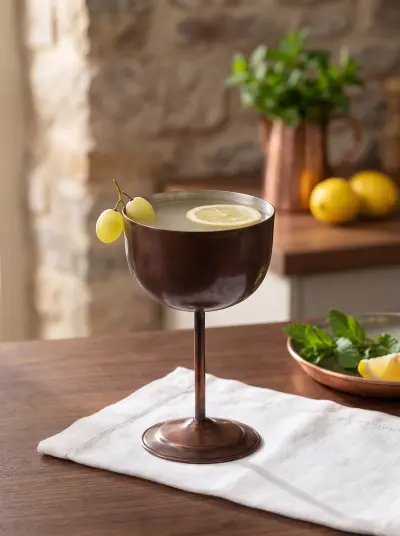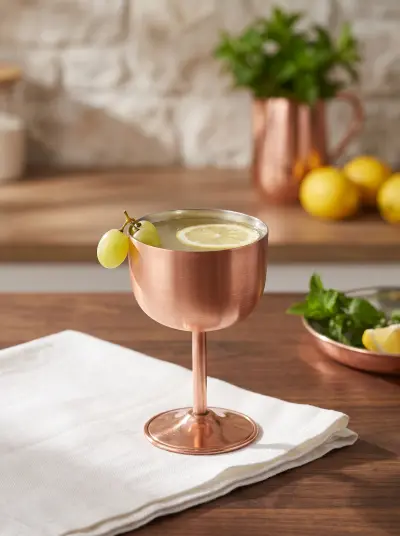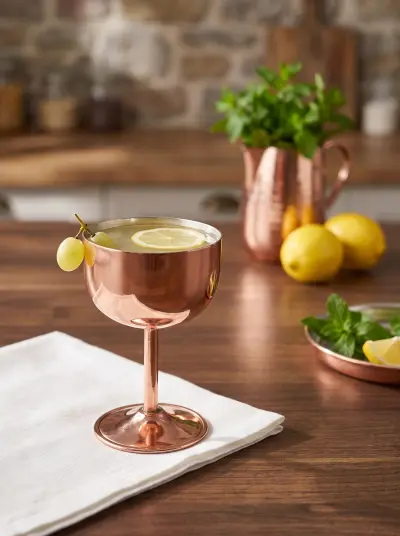
Vino Copper Goblet — No. 2, 400 ml, smooth, polished copper
TC20022-1
How to specify wholesale copper bar supplies from Turkey: solid vs plated barware, lined interiors, goblet sizes, ice buckets, finishes, branding, spare stock.
Browse the range, add the pieces you need to your quote list and ask for prices in one message. No account, no online prices.
Buy wholesale copper bar supplies line by line: fix each item's stock code, body material (solid copper or plated), interior treatment, capacity and finish, then send the quantified list for a written quote. Goblets, cocktail glasses, ice buckets, raki glass coolers and pitchers can ship from Turkey together, with price, minimum quantity and lead time confirmed per order.
A copper bar programme is a set of product lines that appear on the same counter and the same tables: wine goblets, cocktail glasses, tumblers and mugs, ice buckets, raki glass coolers (raki is the Turkish anise spirit) and pitchers. Specifying them together keeps finish and tone consistent and lets them travel in one consignment.
Most buyers start from one hero item, usually a signature cocktail glass, and the programme grows from there. The risk is that each line is then bought separately, from different production batches and at different times, and the bar ends up with three shades of polished copper side by side. Treat the programme as one specification with several lines, even if you phase the deliveries.
The table below maps the main lines to real stock codes in the catalogue and to the one question that most often goes unasked for each.
| Line | Catalogue examples | Confirm before ordering |
|---|---|---|
| Wine goblets | Merlot 500 ml TC20028-1, Vino No. 2 400 ml TC20022-1, Vino No. 1 240 ml TC20026-1 | Interior treatment and the stem-to-bowl joint |
| Cocktail glasses | Copper Cocktail Glass 250 ml TC20023-1, Zo 250 ml TC20025-1, Margarita 450 ml TC20024-1 | Interior lining for citrus drinks |
| Ice buckets | Mercan 24 cm TC40016-1, Adalı 15 cm TC40017-1, Gerdel TC40018-1 | Interior height against your bottles, single or double wall |
| Raki glass coolers | Klasik TC30080-1, Lidded TC30081-1, Jelli TC30082-1 | That your raki glass fits the opening |
| Pitchers | London Copper Pitcher 2000 ml TC30079-1 | Interior treatment if acidic drinks are served |
Copper mugs for the Moscow mule are a line of their own, with their own sizing and handle questions; they are covered in the wholesale copper mug guide and not repeated here. The goblet and cocktail range sits in copper wine and cocktail glasses.
Three different constructions are sold as copper barware, and the order has to name which one you are buying. Solid copper has a body formed from copper sheet. Copper-plated barware has a steel or alloy body with a thin copper layer on the outside. Nickel-plated copper has a solid copper body with a silver-toned nickel surface.
The first and third are both copper bodies; they differ only in the visible surface. The catalogue lists nickel-plated versions of several goblets, for example the Margarita goblet as TC20024-2 and the Vino No. 2 goblet as TC20022-2, and states the material as copper with a nickel finish. Copper-plated steel is a different product altogether, cheaper to make and legitimate in its place, but it is not interchangeable with either. The trap is the word copper doing the work of a material specification. A quote that says copper goblet without saying what the body is made of leaves the question open until the goods arrive.
Write it in a form that cannot be read two ways: body material solid copper, stated wall thickness, exterior finish named, interior treatment named. The general method, with wording you can paste into a request, is in how to specify solid copper in an RFQ.
Yes, if acidic drinks will be served in them. Copper reacts with acidic liquids such as lime and lemon juice, and the reaction grows with contact time and temperature. That is the reason drinkware interiors are lined, and the reason the interior treatment belongs in the order rather than in an assumption.
Cocktail programmes are acidic by design. Margaritas, sours, daiquiris and most long drinks carry citrus, and some menus add vinegar-based shrubs. A short service window does not make an unlined interior suitable for these drinks, and a pre-batched drink left standing in copper is the worst case of all. Background on how lining works, and what to write into a specification, is in copper vessel safety for buyers.
Catalogue listings for barware give body material, capacity, thickness and finish; they do not yet carry a separate interior field. Ask for the interior treatment per stock code in the written quote, and accept nothing vaguer than one of these three answers: tin-lined, stainless-lined, or unlined (bare copper). A bare interior is only appropriate for non-acidic drinks such as water; wine, citrus and most cocktails are below pH 6, and the US FDA Food Code (section 4-101.14) does not allow copper to contact food or drink below pH 6. If you choose a bare interior, the house rule has to say so, and the bar team has to know which drinks go into which piece.
Two operating rules apply whatever lining you choose. Fill at the point of service rather than in advance, and never use copper barware or pitchers to store or batch drinks. On a sample, look into the bowl under a strong light and check that any lining runs continuously down to the base and around the stem joint, where coverage is hardest to apply. Buyers supplying US venues should also read why US food codes expect tin-lined copper.
The capacity in a listing is the brim-full volume, not the pour. A working pour fills well below the rim so the drink can be carried, swirled or iced, so choose the vessel by the drink plus its headroom, not by the number alone.
Copper adds a constraint glass does not have: it is opaque. Neither the bartender nor the guest can see the fill line, so pours have to be measured with a jigger or a marked measure, and a recipe that relies on topping up to a visual line has to be rewritten. For wine, check the measures your licence and local rules require you to offer and make sure each goblet holds the largest of them with room to spare.
| Capacity | Catalogue example | Suits | Note |
|---|---|---|---|
| 240 ml | Vino No. 1, TC20026-1 | Small wine pours, fortified and dessert wine | Height 14.5 cm |
| 250 ml | Copper Cocktail Glass TC20023-1, Zo TC20025-1 | Drinks served up, shaken or stirred | Zo walls 0.60 mm |
| 400 ml | Vino No. 2, TC20022-1 | Standard wine service with room to swirl | Height 19.0 cm |
| 450 ml | Margarita, TC20024-1 | Frozen, blended and long drinks over ice | Height 18.0 cm |
| 500 ml | Merlot TC20028-1, Vine-Gall TC20027-1 | Large-bowl reds, spritz-style drinks | Vine-Gall walls 1.30 mm |
Height matters behind the bar more than buyers expect. The Merlot goblet stands 13.6 cm, the Vine-Gall 21.0 cm. Before you order, measure the clear height of the back-bar shelves and the drying racks the pieces will live on, because a tall goblet that does not fit the shelf ends up stored on its side and dented.
Wall thickness is the other figure to read. Barware does not go on heat, and the goblets in the catalogue sit between 0.60 and 1.30 mm wall thickness. Thinner walls are lighter and cheaper; thicker walls resist the knocks of a busy bar. For a high-volume venue, the thicker-walled lines are worth the difference.
A copper ice bucket is a service piece, not an insulated container. Copper conducts heat roughly 25 times better than stainless steel, around 400 W/m·K against about 16 W/m·K for type 304 stainless, which is why the bucket feels cold immediately and beads with condensation within minutes.
What slows ice melt is a second wall with an air gap or an insulated liner, not the choice of metal. The ice bucket listings in the catalogue describe diameter, wall thickness and weight, not a double wall, so plan them as single-wall pieces and ask in writing if insulation matters to your service. The Mercan bucket is 24 cm across at 0.80 mm and about 1220 g; the Adalı is 15 cm across at the same thickness and about 550 g; the Gerdel is a thinner 0.55 mm pail at about 910 g.
Three practical points follow. First, condensation runs down the outside, so every bucket on a table needs a tray, saucer or coaster; specify it with the bucket rather than discovering the water rings later. Second, a listed diameter does not tell you whether a 75 cl bottle stands upright with enough ice around it; ask for the interior height and compare it with the tallest bottle on your list. Third, handles take the full weight of ice and water, so check how they are attached on the sample. The full range is under copper ice buckets.
The raki glass cooler, known in Turkey as the ehlikeyf, holds crushed ice around a raki glass so the drink stays cold on the table through a long mezze meal. It is a staple of the meyhane, the Turkish tavern, and a natural fit for Turkish, Greek and Levantine restaurants abroad; a fuller equipment list for those venues is in the Middle Eastern restaurant copper checklist. The Klasik version is a light 0.40 mm piece at about 130 g; the Lidded version (TC30081-1) stands 8.0 cm tall and 11.8 cm across, at 0.40 mm and about 212 g. Send the base diameter and height of your raki glass with the enquiry so the fit can be confirmed before production. See copper raki glass coolers.
Finish is a labour decision as much as a design one. Polished copper looks best and tarnishes fastest; oxidised and brushed matt finishes hide fingerprints and accept natural darkening; nickel-plated pieces keep a silver tone with less visible change. Pick the finish the bar team can actually maintain.
A bar is harder on copper than a dining room. Citrus splashes, wet bar towels, sanitiser sprays and constant handling all mark the surface. The table below sets out what each catalogue finish asks of the team.
| Finish | Stock code suffix | Look in service | Care load |
|---|---|---|---|
| Polished copper | -1 | Bright, shows every fingerprint | High, scheduled polishing |
| Nickel-plated | -2 | Silver tone, steady colour | Low to medium, soft cloth |
| Oxidised | -3 | Dark antique tone, hides marks | Low, no polishing |
| Brushed matt | -4 | Soft sheen, hides light handling | Low to medium |
Three rules apply to every finish. No glasswasher or dishwasher: hand wash with a mild detergent and dry immediately. No abrasive pads or chlorine-based cleaners. And if any piece carries an exterior lacquer, it is never polished, because polish strips the coating and the copper underneath then darkens unevenly. How each finish is produced and how to write it into a specification is covered in copper surface finishes explained.
A final point for programmes that mix finishes: oxidised pieces will not return to polished copper without refinishing, so decide the finish per line at the start rather than hoping to change it later.
Yes. Copper takes a venue logo well, and the right method depends on the finish. Laser marking gives sharp contrast on oxidised and nickel-plated surfaces, hand engraving suits short runs and traditional designs, and stamping or embossing needs tooling that only pays back over larger quantities.
On barware, the brand area is curved and small. A goblet bowl curves in two directions, so a logo wider than a few centimetres distorts at its edges; the foot and the lower bowl are flatter and safer. On ice buckets and pitchers the body offers a larger, gentler curve. Ask for a proof on the actual piece, not a flat drawing, and approve placement, size and depth on a branded sample before production.
Branding also changes the reorder logic. A branded goblet is no longer a stock item, so replacement pieces need the same artwork file, position and method on record. Methods, break-even quantities and acceptance criteria are set out in the copper logo and engraving guide.
Copper barware rarely breaks, but it dents, loses its finish and walks out of the door. Plan replacement stock around those three, not around shatter rates borrowed from glassware, and make sure every reorder can be matched exactly to the original.
A useful opening quantity is what is in use on a busy night, plus what is moving through hand washing and drying, plus a reserve for damage and loss. The reserve should be measured rather than guessed: count each line at the end of every month for the first months of trading and size the second order from that real attrition. Small, attractive pieces such as cocktail glasses and raki glass coolers tend to go missing faster than ice buckets.
Matching is where reorders go wrong. Record the full stock code, including the finish suffix, so that a polished Margarita goblet is reordered as TC20024-1 and not as a nickel-plated or oxidised version by accident. Hand-hammered pieces vary slightly by nature, so keep an approved sample of each line as the colour and texture reference. If reorders will be small and frequent, ask at the first order how repeat quantities are quoted and whether a reserve can be shipped with the main delivery.
Venues buying for several outlets, or hotels running a bar alongside restaurant and room service, can fold the bar programme into a wider order; how that works for hotels and restaurants is described on the HORECA copper equipment sourcing page, and hotel bars bought through an opening order are covered in hotel OS&E copper procurement. Bars importing into the UK will find duty and documentation notes on the United Kingdom market page.
Build the order from the venue's menu outward: list the drinks, assign each a vessel and capacity, choose one finish per line, then size quantities. The table below shows typical starting programmes; the stock codes are real catalogue items and the mix should follow your own menu.
| Venue | Core lines | Add-on lines |
|---|---|---|
| Cocktail bar | Copper Cocktail Glass TC20023-1, Margarita TC20024-1 | Adalı ice bucket TC40017-1, copper mugs |
| Wine bar or restaurant | Vino No. 2 TC20022-1, Merlot TC20028-1 | Mercan ice bucket TC40016-1 with trays |
| Meyhane or mezze restaurant | Klasik raki cooler TC30080-1, Lidded TC30081-1 | London pitcher TC30079-1 for water |
| Hotel lobby or pool bar | Vino No. 2 nickel-plated TC20022-2, Zo TC20025-1 | Mercan ice bucket, oxidised TC40016-3 |
Water and table pitchers deserve a short word, because they complete most bar and restaurant programmes. The London Copper Pitcher holds 2000 ml with 1.00 mm walls and comes in polished, nickel-plated, oxidised and brushed matt versions, so it can follow whatever finish the rest of the programme uses; hand-hammered and engraved alternatives sit in copper pitchers and jugs. Pitchers will get a guide of their own; for a bar programme, the one rule to carry over is that a pitcher is filled at service and never used to store lemonade or batched drinks.
With the programme decided, the order itself takes five steps; if this is your first order from Turkey, the first wholesale copper order guide walks through the whole sequence.
Not in any lasting way. Copper conducts heat very quickly, so a chilled copper goblet feels cold at once and the rim stays cool against the lip, which guests notice. The same property means the hand warms the bowl quickly too. A stem keeps the hand off the bowl. For long drinks over ice, the ice does the cooling, not the metal.
It should not. Commercial glasswasher detergents are alkaline and run hot, which spots and darkens the copper surface and shortens the life of any interior lining or exterior lacquer. Bars that run copper successfully wash it by hand with a mild detergent, dry it immediately with a soft cloth and store it upright and dry. Agree this routine with the bar team before ordering.
Yes, and many venues do it deliberately: polished copper for the signature cocktail, oxidised or brushed pieces for everyday service, nickel-plated goblets where a silver tone suits the room. The rule is to keep one finish per product line, so that a guest never receives a mismatched pair, and to reorder each line with its exact stock code including the finish suffix.
Add the products you want to the quote list with quantities, then send the list by WhatsApp, e-mail or the form. The reply is a written quotation for that order, stating the wholesale price, the minimum quantity, the lead time and the shipping terms. Prices are set per order because quantity, finish, branding and packing all change the figure.
Yes, and for a new bar programme it is worth doing. Order one piece of each line in the finish you intend to use, check the weight, the interior, the stem joint and how the finish looks under your bar lighting, then keep the approved samples as the reference for the production order and every reorder after it.
Polished copper starts to tarnish as soon as it meets air, moisture, citrus and hand contact, so in daily bar use it darkens visibly unless it is polished on a schedule. That is normal behaviour for the metal, not a defect. If the team cannot absorb regular polishing, oxidised, brushed matt or nickel-plated finishes keep a consistent look with far less work.
Weight depends on the piece rather than the material alone: a 450 ml copper goblet in the catalogue weighs about 290 g, a 24 cm ice bucket about 1220 g. The bigger shipping difference is breakage. Copper does not shatter, so export packing is there to protect the finish against scratches and dents, and freight is quoted on the packed weight and volume of your order.
Other guides covering the same stage of the buying process - continue reading here.
Wholesale copper water pitchers for restaurants: capacity per table, spout and handle, solid vs plated, lining for lemon water, finish, care and quantities.
How to plan a first mixed wholesale copper order from Turkey: choosing a trial range, reading stock codes, setting quantities and writing a quote request.
How to buy wholesale copper tumblers and water cups from Turkey: capacities, smooth or hammered, finish codes, singles versus sets, care, branding, quote lists.
Add the products you need to your quote list with quantities and send it by WhatsApp, e-mail or the form. We reply with unit prices and delivery terms.