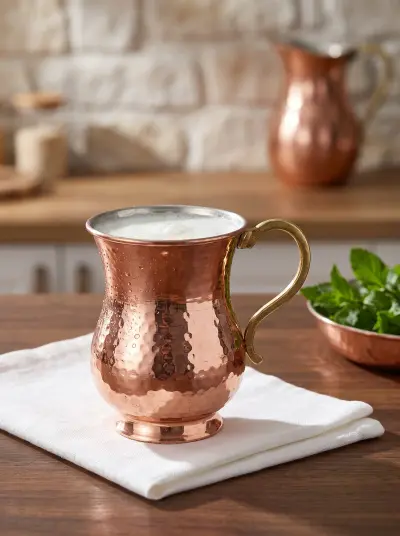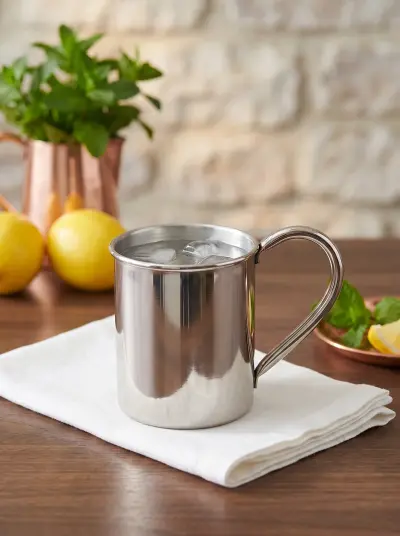
Lungo Copper Tumbler — 530 ml, smooth, polished copper
TC20020-1
Wholesale copper mugs for bar and hotel buyers: solid copper versus plated, lining options, capacity, finishes, custom engraving and what belongs in an RFQ.
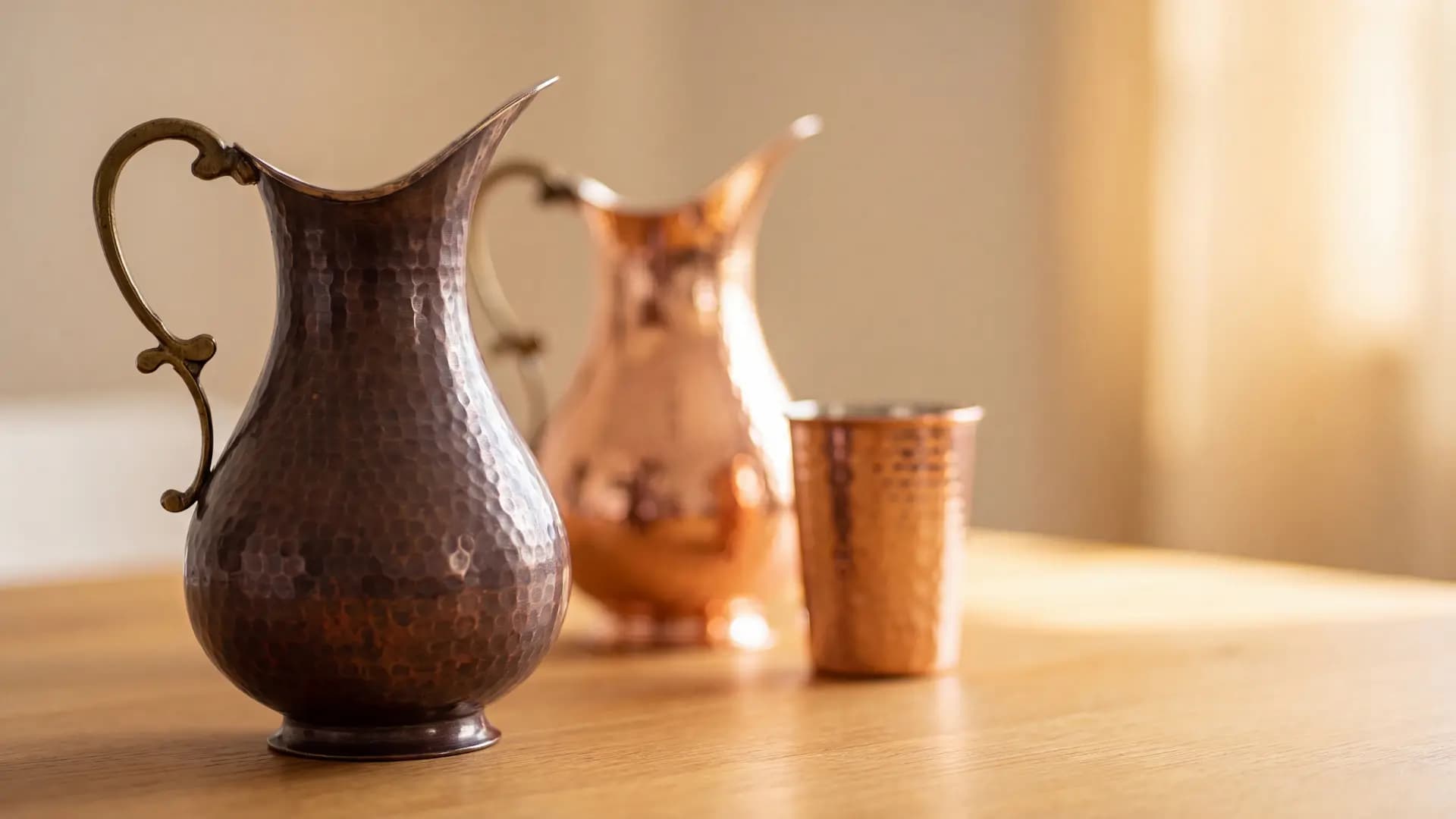
Browse the range, add the pieces you need to your quote list and ask for prices in one message. No account, no online prices.
Buying copper mugs at wholesale comes down to three answers before price matters: whether the body is solid copper or copper-plated steel, whether the inside is lined, and which branding method the run will use. Until those are fixed, quotes cannot be compared: each workshop prices its own assumption. Packaging and delivery terms belong in the same enquiry.
Two products are sold under one name, and most of the price spread starts there. The first is solid copper: the body is formed from copper sheet by spinning, pressing or hand hammering. The second is plated: a stainless steel or alloy base with a thin copper layer applied electrolytically to the outside.
Both are legitimate. The problem is the second being sold as the first, and the question is easy to settle in writing: what is the body material, how many microns is the copper layer if there is one, and does the plating continue inside.
Density gives a usable check. Copper sits at roughly 8.96 g per cubic centimetre against roughly 7.9 for stainless steel. At the same capacity and wall thickness, a solid copper mug is noticeably heavier in the hand, and plated items are usually made with thinner walls, which widens the gap. The full product group sits in the copper mug category.
Suppliers use the word copper loosely. Brass is a copper-zinc alloy, yellower, priced differently and different in service. If a quotation says yellow copper, ask whether that means brass or a surface treatment. An unwritten material name becomes a customs argument, not a bench one.
This is the most technical part of the decision and the one most buyers skip. Copper reacts with acidic liquids. Lime and lemon juice, citrus, vinegar-based mixes and any drink that stands in the mug accelerate the reaction, and it grows with contact time and temperature. That physical fact, not fashion, is why the food contact surface is lined.
You will meet four linings in practice:
The fifth option is to leave the interior bare. That is a decision, not a defect, but it obliges you to state which drinks and standing times the mug is intended for. The dispute that appears most often is exactly here: a mug sold as lined arriving unlined. On the sample, hold the interior to the light and confirm the lining runs continuously into the base corner and behind the handle joint. Which documents the destination market expects is covered in the food contact copper compliance guide.
A mug is a small item, but at service volume its dimensions touch the operation directly. The common capacity range is roughly 300 to 550 ml, with the mid-400s most requested by cocktail programmes. Where drinks go over ice, remember that ice takes volume: a 400 ml mug filled with ice carries far less liquid than the number suggests.
Mouth diameter decides two things at once: how easily the mug is washed and whether ice and garnish go in without a fight. Narrow forms look elegant and leave a corner a brush cannot reach. Base diameter decides tipping resistance; on mugs that travel on trays, a wide flat base makes a permanent difference to spillage.
The handle is the weakest point and the line most often hidden in a quotation. Ask how it attaches: soft solder, brazing, welding or riveting; if solder, specify lead-free. A gap at the joint is both a hygiene and a strength problem. On the sample, hold the handle and twist the body gently to check for movement. Wall thickness on drinkware is lower than on cookware, but a very thin body dents in the hand and goes oval under service pace. Stating thickness in millimetres is the cheapest way to make the quotes comparable.
Finish is not only aesthetic. It is a maintenance load transferred to whoever runs the bar: the same mug in four finishes gives four different operational experiences.
| Finish | Appearance | Maintenance load | Where it works |
|---|---|---|---|
| Raw copper | Natural, darkens quickly | High, frequent polishing | Rustic concepts that want patina |
| Brushed matte | Soft, hides fingerprints | Medium | High-volume bars and hotel service |
| Mirror polish | Bright, photographs well | Highest, marks show at once | Display, presentation, gifting |
| Antique patina | Dark, textured, darkening is the design | Low | Hotel bar programmes, boutique concepts |
Lacquer is its own decision. A clear lacquer outside delays tarnish, but once it wears through the surface goes patchy and can no longer be polished back. For a hotel group keeping the item for years, lacquer is usually wrong; for a short-cycle promotional run it can be right.
Copper mugs are among the most requested items in corporate gifting, and the method question is really a quantity question: what changes is how setup cost is distributed.
| Method | How it works | Setup cost | Quantity logic |
|---|---|---|---|
| Engraving | Surface cut with a tool or bit | Low | Low to mid volume, individual names |
| Embossing | Formed against a die | High, one-off tooling | High volume, repeating programme |
| Laser marking | Focused beam marks the surface | Low, file preparation | Mid volume, fine detail |
| Screen printing | Ink pushed through a mesh | Medium, per screen | Colour logos, mid to high volume |
Copper is highly reflective, so laser marking is less straightforward than on steel and the contrast depends on the finish and the machine. Do not commit a large laser run without a physical sample. Screen printing is the only method here that carries a colour logo, but ink wears, so place it at handle height or on a lower band rather than where the hand grips. Embossing is the most durable because the mark sits in the metal itself; the tooling charge is one-off and divides across the run.
Personalised name engraving is the most-asked gifting option, and the risk is not quantity but file discipline: agree the name-list format, the character limit, accented-character handling and who owns a spelling error. Workshops taking branded and contract work are listed under logo-printed production.
Three buying patterns account for most wholesale copper mug demand, and their specifications are not interchangeable.
The first is the moscow mule programme. The cocktail is why copper mugs left folk craft and entered bar equipment lists, and demand comes from bar chains, hotel beverage programmes and drinks brands running activations. The consequence is direct: these mugs meet lime juice constantly, so lining is not optional, and they are handled hard, so wall thickness and handle attachment matter more than finish.
The second is hospitality service outside cocktails: iced coffee, lemonade, iced tea and water. Copper conducts heat well, so the mug pushes the cold of its contents outward, which is what frosts the exterior guests notice. These mugs usually have to match pitchers and ice buckets already on the table.
The third is retail and corporate gifting, where packaging and branding drive the specification rather than service durability. The mug ships in an individual box, usually with a logo or a name. Keeping the three patterns on separate enquiry lines is what makes the returning quotes readable.
The difference between two quotes for the same item is usually scope, not price. Seven lines make the comparison meaningful:
Add the mugs to the quote list and enter these lines with it before you send it by WhatsApp, e-mail or the form. Minimum quantities, cost components and lead times are broken down in the MOQ, pricing and lead time guide, export packing terms in export packing and container loading, and cluster specialisation in the Turkish copper cookware manufacturers guide.
Certain defects recur, and they are not accidents: each is a known way of taking cost out.
Thin walls come first: the mug feels light, the rim flexes under a thumb and it goes oval after a few weeks on trays. Second is an untidy handle joint: excess filler, burrs or an unclosed gap between handle and body. Third is an unlined interior sold as lined, visible when the inside reads the same colour as the outside under direct light. Fourth is plated steel presented as solid copper.
The fifth is quieter: a finish that is not uniform across the piece. Mugs where polishing was skipped under the handle, around the base and at the rim pass a shelf inspection and fail on the first photo shoot. Turn the sample over and look under the handle. The protection is written acceptance criteria: maximum surface blemish, dimensional tolerance and continuity of the lining, set in the contract, not in an email.
Four checks together give a reliable answer without a laboratory.
Magnet. Pure copper is not magnetic. Hold a strong magnet to the outer body: if it grips, the base metal is steel and the item is plated. The detail that catches people out: a solid copper mug with a stainless steel liner attracts a magnet on the inside. Always test the exterior.
Weight. Copper is dense. Weigh the mug and judge it against its capacity: a solid piece feels heavier than its size predicts. Comparing the quoted unit weight against the sample on a scale is an indirect but dependable read on wall thickness.
Scratch and edge. Score the surface lightly at an invisible spot, under the handle or at the base edge. Solid copper shows copper underneath; a plated item shows a grey base metal. The rim is worth checking too, since plating is thinnest there and the difference is sometimes visible without scratching.
Sound. A thin steel body rings with a long, bright tone; thicker solid copper answers with a duller, shorter note. On its own it proves nothing, but alongside the other three it either fits the picture or breaks it.
These field tests are set out in more detail in how to identify real copper. To pick drinkware pieces for your quote list, start from the catalogue.
Hold a strong magnet against the outer body. Solid copper is not attracted; copper-plated steel is. Do the test on the outside, because a solid copper mug with a stainless steel lining will attract a magnet on the inside. Then check weight against size, scratch a hidden spot to see whether a grey base metal appears, and listen to the tone when you tap it.
If acidic drinks are served in them, yes. Copper reacts with lime, lemon, citrus juice and vinegar-based mixes, and the reaction grows with contact time and temperature. Tin, stainless steel or a food grade lining separates the drink from the metal. Leaving a mug unlined is a decision that has to be documented, not an omission.
The common range for service mugs is roughly 300 to 550 ml, with the mid-400s the most requested size for cocktail programmes. Always state capacity in millilitres in your enquiry. Two mugs that look identical in a photograph can differ by 100 ml, which changes the copper weight per unit and therefore the price.
It depends on the method rather than the design. Engraving and laser marking carry low setup cost and can be applied to single pieces, so unit time rises with quantity. Embossing needs a die: the tooling charge is one-off and divided across the run, which only works on repeat, higher-volume programmes. Ask for the tooling cost as a separate line.
As a rule, no. Machine detergents are alkaline and attack both the copper surface and a tin lining, while high temperature and a long drying cycle accelerate staining. Professional service expects hand washing with a mild detergent and immediate drying. Putting that instruction in the product information prevents most of the surface complaints that appear later.
Copper oxidises on contact with air, moisture and hands, and a mirror-polished surface shows it first. Darkening is the natural behaviour of the metal, not a fault. Antique patina finishes make it part of the design. Lacquered pieces stay bright longer, but once the lacquer wears through, the surface becomes uneven and can no longer be polished back.
The usual package is a written declaration for food contact use, a metal release test report from an accredited laboratory covering the specific article and lining, a material and lining specification, and use instructions in the destination language. The exact list depends on the destination market and its national rules.
Often yes, and it is worth asking early. Workshops that produce drinkware frequently also make pitchers, ice buckets and trays on the same benches, which lets you consolidate a bar programme into one shipment. Consolidation reduces freight cost per unit and keeps the finish consistent across items that sit on the same table.
Other guides covering the same stage of the buying process - continue reading here.
Wholesale copper water pitchers for restaurants: capacity per table, spout and handle, solid vs plated, lining for lemon water, finish, care and quantities.
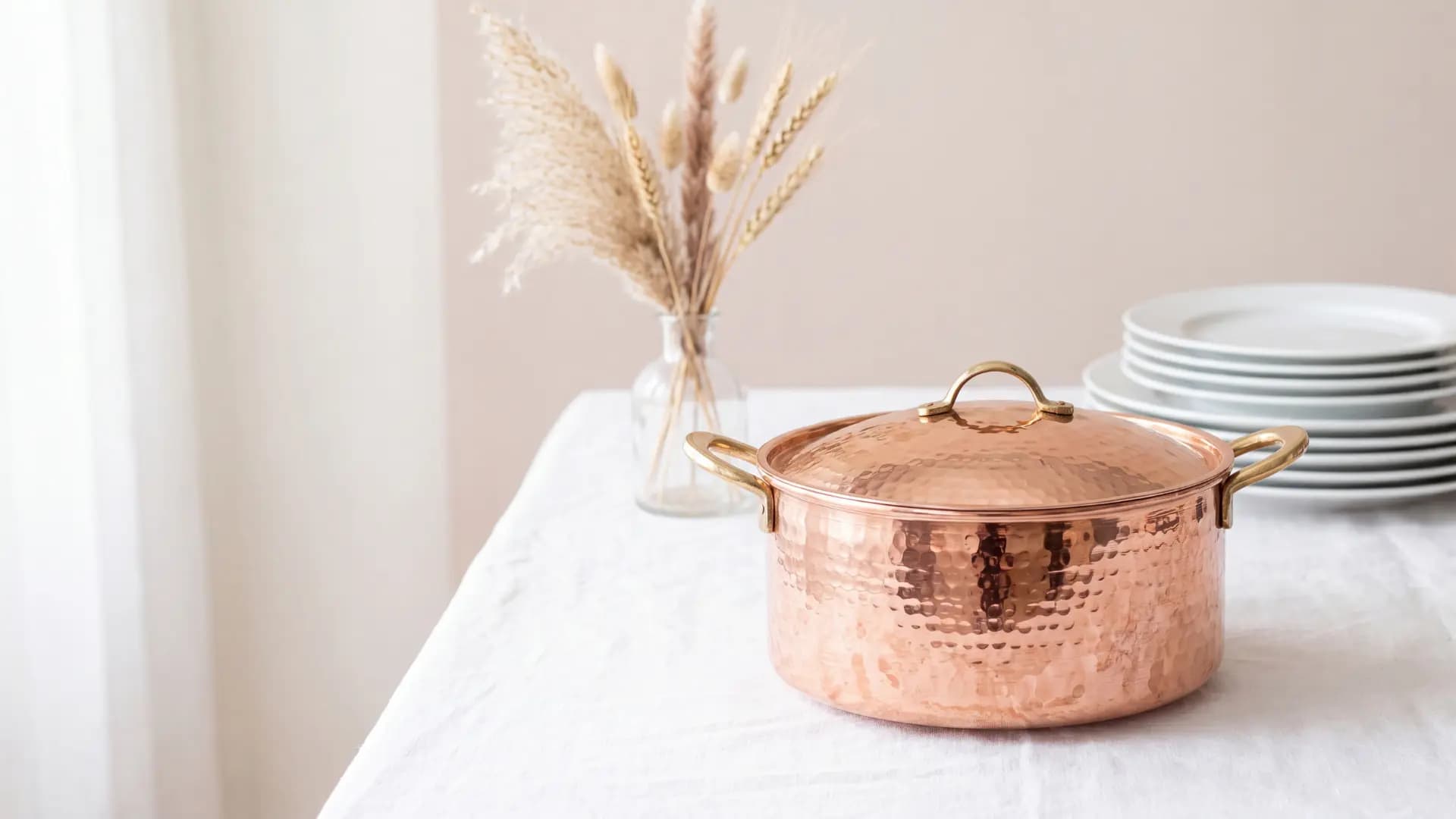
How to plan a first mixed wholesale copper order from Turkey: choosing a trial range, reading stock codes, setting quantities and writing a quote request.
How to specify wholesale copper bar supplies from Turkey: solid vs plated barware, lined interiors, goblet sizes, ice buckets, finishes, branding, spare stock.
Add the products you need to your quote list with quantities and send it by WhatsApp, e-mail or the form. We reply with unit prices and delivery terms.