
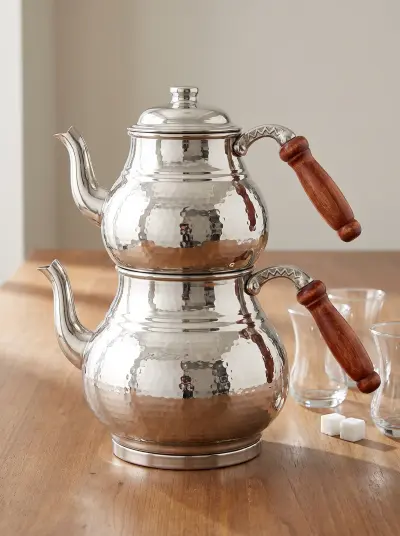
Klasik Copper Turkish Double Teapot — No. 3, light gauge, hand-hammered, nickel-plated
TC10060-2
Compare Turkish copper cookware manufacturers by region, gauge, tinning and capacity. How to shortlist suppliers and request a wholesale quote.
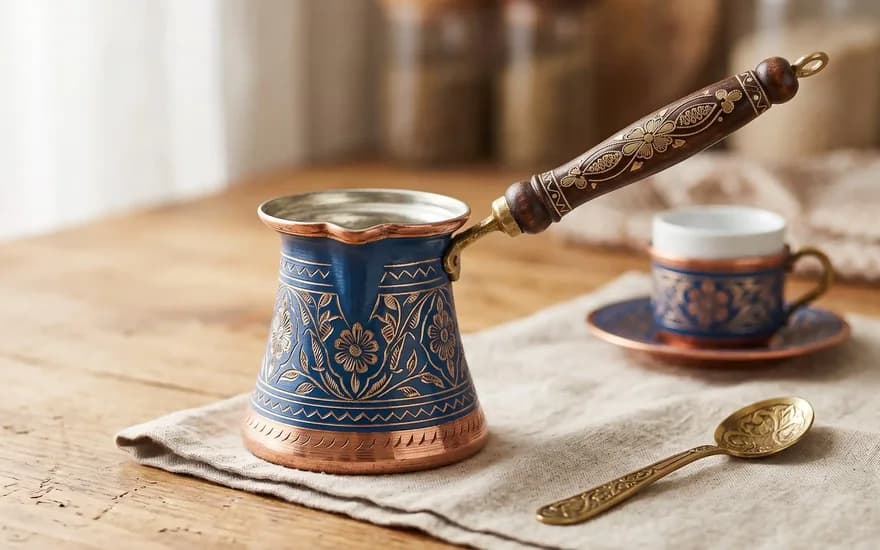
Browse the range, add the pieces you need to your quote list and ask for prices in one message. No account, no online prices.
Turkey's copper cookware production is concentrated in four cities: Gaziantep, Kahramanmaraş, Trabzon and Erzincan. Gaziantep covers volume and product range, Kahramanmaraş is the hammered-copper cluster, Trabzon holds the traditional forms and the tinning trade, and Erzincan works in small handmade batches. The right supplier depends on your product type and order size.
Copper work in Turkey is not a nationwide industry. It is a craft trade that survived in a handful of cities, each with its own bench tradition, product weight and habits about batch size. For a sourcing desk this is practical, not folkloric: knowing which city makes the item you want turns a multi-week supplier search into a two-day shortlist. The guide to Turkey's four copper clusters sets out how they are distributed.
Gaziantep has the broadest product range and the highest aggregate capacity of the four clusters. Workshops here cover lined pots, large stockpots, serving trays and coffee pots under one roof, and a share of them keep pressing, spinning and tinning in house. That shortens lead times and reduces the quality drift that creeps in when work is subcontracted between benches.
If you need catalogue breadth, several product groups in one shipment, or a recurring programme, this is the natural first stop. It is also where OEM work, branded production and custom collections find the most takers, helped by the supporting trades: tooling, handles, packaging and freight sit in the same area, so a custom request is not capped by one workshop's own equipment.
What sets Kahramanmaraş apart is hammering. Sheet is worked into shape with a hammer at the bench, which leaves a surface texture that cannot be repeated identically and work-hardens the body in the process. The difference between a hammered pan and a pressed one is not only visual: weight distribution and rim strength differ too.
This suits heavy-duty kitchens, open-kitchen restaurants, and brands that put craft at the centre of the product story. Batches tend to be tighter than in Gaziantep because every piece takes bench time. Workshops in Kahramanmaraş concentrate on pans, pots and shallow service pieces.
Trabzon is known for its repertoire of traditional forms and for tinning as a living trade. On copper cookware the tin lining is not decoration but a functional requirement: it separates copper from direct food contact and largely determines the service life of the piece. In a cluster where tinning never disappeared, you get more precise answers about lining thickness and retinning.
This is the right cluster for authentic forms, coffee pots, shallow pans and traditional service pieces. Our guide on caring for a tin lining covers how to inspect the coating and extend its life.
Erzincan is a small cluster, and that is a position rather than a shortfall. A limited number of masters produce a limited number of pieces, with high detail and finishing content. It fits boutique collections, limited-run gift lines and products meant to be described one by one.
If you are buying container volumes of standard items, this cluster will not answer your brief. If you are a retailer or a boutique hotel buying for story and scarcity, the Erzincan workshops offer something the others cannot. Plan longer lead times: the constraint is master hours, not line capacity, and one master will not run two large jobs in parallel.
| Region | What it makes | Typical batch size | Best fit for |
|---|---|---|---|
| Gaziantep | Lined pots, stockpots, serving sets, broad catalogue | Medium to high | Importers consolidating many SKUs |
| Kahramanmaraş | Hammered pans, pots, shallow dishes | Medium | Heavy-duty kitchens, craft-led brands |
| Trabzon | Traditional forms, coffee pots, tinning trade | Small to medium | Authentic shapes, lining quality first |
| Erzincan | Small-batch handwork, decorative and gift lines | Small | Limited runs, boutique collections |
Sourcing from Turkey puts three kinds of counterpart in front of you: a workshop with its own benches, an exporter that consolidates from several workshops and ships, and a trading company that brokers on commission. All three are legitimate business models, but they give you different things.
A manufacturer controls tooling, capacity and workmanship. It can answer a request for a custom diameter, a different handle profile or a deeper engraving at bench level, and a sample revision is one phone call away. In exchange, it may not make every product group, so a mixed order can mean managing more than one supplier.
A consolidator earns its place exactly there: many SKUs in one shipment, one set of documents, one logistics contact. The cost is the extra layer. A quality correction travels through one more person, and in OEM work design decisions get diluted on the way.
The fastest way to find out who you are talking to is to ask specific questions: where is production, is tinning done in house, who owns the tooling for this item, can you send workshop footage.
Comparing prices is misleading when the things being compared are not the same. The gap between two quotes for what looks like the same pan usually comes from one of the five items below rather than from a discount.
Wall thickness drives both heat behaviour and durability. Heavy-duty professional pieces are typically specified between 2 and 3 mm. A thinner body is lighter and cheaper, but under daily service the rim deforms sooner and the lining tires earlier. Put the figure in millimetres on the RFQ; leave it out and every workshop applies its own house standard, which makes the incoming prices incomparable.
The coating on the food contact surface is the most critical technical clause in the contract. How the lining is applied, how thick it is, and on what terms it can be renewed should be settled at quotation stage. Tin melts at roughly 232 degrees Celsius, so an empty pan left on high heat damages the lining directly, and that fact belongs in your product information for end users.
For food contact goods, the rules of the destination market decide what is acceptable, and this is not a post-order conversation. Which documents are required, who prepares them, and whether a sample has been tested are week-one questions. The detail is in the food contact copper compliance guide.
Delivering a first order and reproducing the same item at the same quality six months later are two different abilities. Ask about monthly capacity, how many SKUs can run concurrently, and how lead times shift in peak season. For a repeating programme this matters more than unit price.
A workshop that has shipped abroad before saves you time on packing and paperwork. Copper is heavy and soft, so a badly packed pallet means dented goods at the destination port. Our export packing and container loading guide lists the clauses worth agreeing before production starts.
The last technical step before you accept a quote is the sample, and skipping it is one of the more expensive mistakes in wholesale copper. A sample tells you not whether the piece looks right, but whether the specification you wrote was understood the same way at the bench.
When it arrives, check specific things. Measure the wall against the spec. Hold the interior to the light and confirm the lining runs continuously into the base corner and up to the rim. Look at how the handle is attached and whether a gap remains at the joint. Set the piece down and see whether it rocks. Weigh it, because in copper weight is an indirect but reliable proxy for gauge.
Then keep the approved piece. It is your reference when the production run lands, and a verbal understanding is worth little against a pallet that arrives eight weeks later. For custom sizes or branded items, pre-production approval is standard practice: the workshop makes the first few pieces, shares photographs, and continues only after you sign off.
On a sourcing site, a verified badge usually means one specific thing: someone has confirmed the business details and contact information. Certificates are a separate claim, each with its own validity date.
Verification is not a quality guarantee. What it removes is the most expensive step in sourcing: weeks spent corresponding with a company you cannot confirm exists. Whether the product suits you is still decided by a sample and a quote. To sanity-check raw material by hand, how to identify real copper walks through simple field tests.
The classic approach is to email ten companies separately and transcribe the replies into a spreadsheet. It is slow, and comparison is nearly impossible, because each company quotes on its own assumptions.
Buying from The Coppery works differently. You pick the products in the catalogue, add them to the quote list and send it by WhatsApp, e-mail or the form, with quantity, gauge, lining preference, target delivery date and any reference images in one structure. The catalogue carries no prices; The Coppery replies with the wholesale price, minimum quantity, lead time and shipping terms for that order.
When you read the offers, unit price alone will mislead you. Four items decide whether a comparison is real:
Settle those four and the difference between two offers is genuinely a price difference. Leave them open and it is usually a scope difference wearing a price tag.
There is no single minimum order quantity in wholesale copper; the threshold depends on whether the work is standard or custom. On catalogue items quantities are generally flexible and can be met by mixing SKUs. For custom dimensions, branding or new tooling the threshold rises clearly, because setup cost is divided across the run.
Pricing is not fixed either. Copper is a traded commodity and its price moves with the market, which is why offers usually carry a limited validity window. The labour share is higher on hammered and hand-finished pieces than on pressed ones, and that gap widens as the piece gets larger.
Lead time comes down to three things: whether the item is in stock, whether tooling is needed, and the season. Benches genuinely fill in peak months. The numeric ranges are broken down in the MOQ, pricing and lead time guide.
Work in this order. First fix the product group: professional cooking vessels, service pieces, or a branded collection made to your own drawings. Cooking vessels and OEM work call for different kinds of workshop, and mixing them in one brief slows everything down.
Then narrow the region: Gaziantep for range and volume, Kahramanmaraş for hammered texture, Trabzon for traditional forms and lining quality, Erzincan for limited handmade runs. Finally, collect offers from more than one workshop against an identical specification. What makes a comparison meaningful is that everyone answered the same question.
TC10060-2
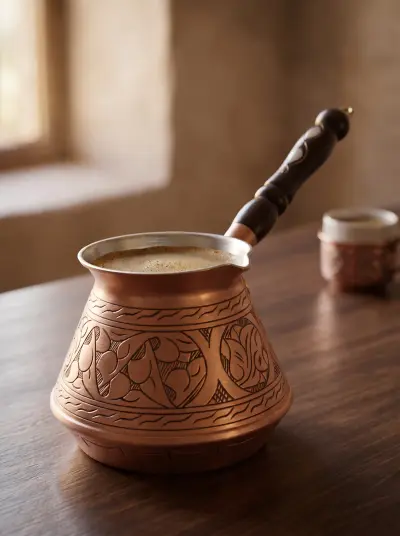
TC10055-4
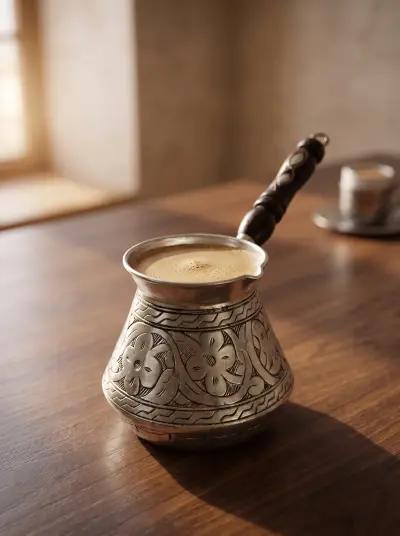
TC10055-6
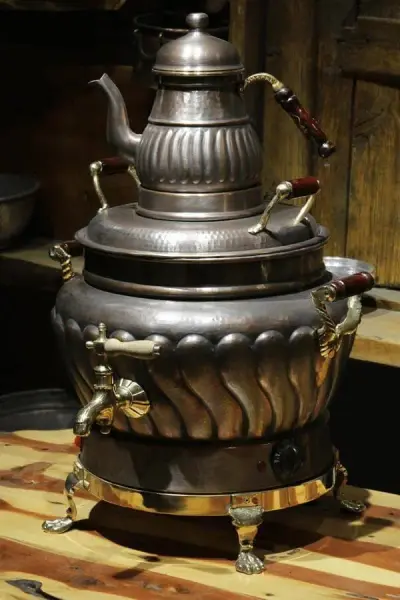
TC10076-3
Production concentrates in four clusters. Gaziantep carries the widest product range and the largest capacity, Kahramanmaraş is known for hand-hammered work, Trabzon for traditional forms and a living tinning trade, and Erzincan for small-batch handwork. Which city suits you depends on the product type and the order size, not on price alone.
Heavy-duty service pieces are typically specified between 2 and 3 mm. Thinner bodies are lighter and cheaper but are more prone to rim deformation and to early wear of the tin lining under daily service. Decorative and light service items can sit below that band. Always state the gauge in millimetres on the RFQ, otherwise each workshop quotes its own default.
Tin melts at roughly 232 degrees Celsius, so leaving an empty pan on high heat damages the lining directly. Renewal frequency depends on use rather than on age. A busy professional kitchen may retin annually, while domestic use often runs for several years. Ask the workshop whether it offers retinning as a service before you order.
Ask concrete questions. Where is the production address, is tinning done in house, who owns the tooling for this item, and can you see photos or video from the workshop floor. A manufacturer answers at bench level and can revise a sample quickly. A trading company consolidates from several workshops, which helps on mixed shipments but adds a layer on quality corrections.
For catalogue items the minimum is usually flexible and can be met by mixing SKUs. For custom sizes, branded pieces or anything that needs new tooling, the threshold rises noticeably because setup cost is divided across the run. Exact figures vary by workshop and item, so state your quantity clearly when you request a quote.
Add the products you need to the quote list and send it by WhatsApp, e-mail or the form. The catalogue carries no prices; The Coppery replies with the wholesale price, minimum quantity, lead time and shipping terms for that specific order.
Measure the wall thickness against the specification, hold the interior to the light to confirm the tin lining runs continuously into the base corner, inspect whether handles are riveted or welded and whether any gap remains at the joint, check that the piece sits flat, and weigh it. In copper, weight is an indirect but reliable proxy for gauge.
Many do, but capability varies and it should be settled before the order, not after. Copper is heavy and soft, so poorly packed pallets arrive dented. Agree who is responsible for palletising, container loading, and which food contact documents will be issued for your destination market.
Other guides covering the same stage of the buying process - continue reading here.
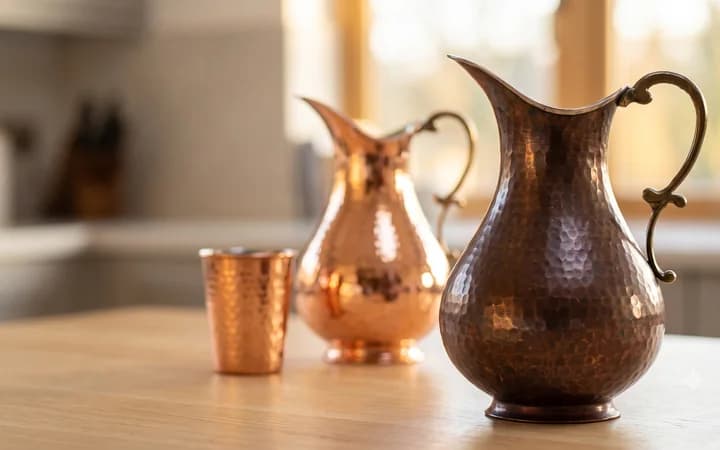
A supplier verification method for copper cookware: three layers of proof, factory audit checklist, sample measurements, red flags and the document chain.
How to set payment terms with a small Turkish workshop: deposit and balance logic, when a letter of credit is proportionate, the EXW trap, and FOB vs DAP.

How OEM and private label copper production works: three levels of customisation, tooling cost and ownership, sample sign-off, branding methods and packaging.
Add the products you need to your quote list with quantities and send it by WhatsApp, e-mail or the form. We reply with unit prices and delivery terms.