
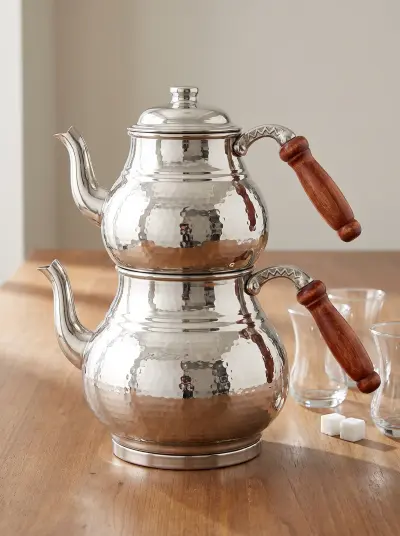
Klasik Copper Turkish Double Teapot — No. 3, light gauge, hand-hammered, nickel-plated
TC10060-2
Copper alone is not a specification. How to write solid copper, tin-lined and hammered into an RFQ, tell copper from copper-coloured metal, and read quotes.

Browse the range, add the pieces you need to your quote list and ask for prices in one message. No account, no online prices.
A request for quotation that says only copper prices three different products against each other: solid copper, copper-plated steel or aluminium, and a pan that is merely copper coloured. Separate material, wall thickness, lining, finish and forming method into their own lines, and the quotes you get back become comparable for the first time.
Copper is the name of a metal, but in retail and catalogue language it very often works as the name of a colour. Two separate markets show the same pattern. In United States retail, a large share of what is listed as copper cookware is copper-coloured non-stick aluminium; the only copper thing about the product is its finish. In German catering catalogues, an item sold under the name Kupfer can carry chrome-nickel steel in its material field, and the price anchor of that market has settled there.
The consequence is the same on both sides of the table: a buyer compares two different products in one list without knowing it. Placed next to a copper-coloured pan, a solid copper pan simply looks expensive, because the comparison was made on name and photograph rather than on the body metal.
A buying desk enters three quotes into a sheet, and if the shared columns are product name, quantity and price, the cheapest line wins by default. The specification is where those columns are decided: a line that is not in it does not exist in the comparison. Body material therefore belongs at the top of the enquiry, directly under the product name.
The three categories share a word but not a production route, a service life or a cost structure. The table below shows which question separates which, and why the three cannot honestly sit in the same price column.
| Question that separates | Solid copper | Copper-plated | Copper-coloured other metal |
|---|---|---|---|
| What the body is | Copper throughout | Steel or aluminium body, thin copper layer | Aluminium or steel with a copper-toned finish |
| Magnet behaviour | Does not stick | Sticks if the body is ferromagnetic steel | Does not stick on aluminium |
| At a cut or open edge | Copper right through the section | Copper at the surface, different core beneath | Copper at the surface, different core beneath |
| Heat behaviour | Conducts noticeably better than steel | Follows the body metal | Follows the body metal |
| Typical interior | Tin or stainless lining | Varies | Usually a non-stick coating |
| Lining renewable | Yes, where tin-lined | Not in practice | Not in practice |
No single row decides a purchase; read together, they separate the categories cleanly. The point is not that plated or copper-toned products should not exist, but that all three are sold under one word, and a buyer who does not notice compares prices across categories.
This guide is not an argument against copper-coloured cookware. A copper-toned non-stick pan does its job where light weight, a low price point and easy cleaning are the real requirements, and plated bodies are reasonable in decorative lines where appearance is the whole brief. Buying those knowingly is not a mistake.
Making the choice without knowing it is. A hotel that believes it has bought solid copper and receives copper-coloured aluminium loses the heat behaviour it planned around and the service life it budgeted for. A solid copper piece can be re-lined, repaired, and at end of life still carries scrap value as a metal; a copper-toned non-stick body offers none of those routes, and when the surface is finished the item is finished.
The specification's job is therefore not to ban a category but to record which one you are buying; if plated pieces are acceptable for part of the order, write that down too.
A specification line is complete when two different workshops read it and picture the same product. For copper, five fields do that work, and each is its own line.
Material. Whether the body is solid copper, another metal with copper plating, or a piece finished in a copper tone. Without it the other four lose their meaning, because all four assume the body is copper. State here whether plated pieces are acceptable; an objection raised later is an attempt to prove an expectation nobody wrote down.
Wall thickness. A nominal value, an accepted tolerance and the measurement point. In professional use, pieces that sit directly over a flame typically fall in the 2-3 mm band; service and decorative items sit below it. The detail lives in the wall thickness specification guide.
Interior lining. Tin-lined, stainless-lined or unlined. Unlined copper reacts with acidic food, so the food-contact decision has to be deliberate and written. Tin melts at 232 °C, a limit that belongs in the care instructions rather than a defect. The two are compared in the tin versus stainless lining guide.
Surface finish. Polished, matte, brushed or patinated, and whether any lacquer or colouring layer is applied outside. This line is tied to the material line, because it is where a copper surface is distinguished from a copper-toned coating. The options are set out in the surface finish guide.
Forming method. Hand-hammered, pressed, spun or hybrid. The method drives repeatability and the unit price curve, and it is where you define whether a hammered surface was worked by hand. The comparison sits in the hand-hammered versus machine-pressed guide.
The eight lines below can go into an enquiry as they stand. Fill the blanks for your own item; even one left empty tells the supplier the question was asked.
Line two is the one most often skipped and the one that does most of the work: a product title carries no commitment, while a material declaration is a separate statement inside the quotation and can be referred back to. Line eight does the same job on the price side, keeping material and gauge attached to the number.
The magnet, but in one direction only. Copper is not ferromagnetic, so a magnet will not stick to solid copper. If the magnet sticks, the piece is not solid copper, and that result is conclusive. If it does not stick, nothing has been proven, because aluminium and austenitic chrome-nickel steel are also non-magnetic. The test filters; it does not verify.
Edges and sections. On a plated piece the copper tone stays on the surface, and a different metal shows at the rim, a handle joint or a rivet hole. On solid copper the edge is copper too, and at sampling stage one sectioned piece settles the question at a glance.
Weight. Between two items of the same diameter and depth, the solid copper one is noticeably heavier in the hand. The difference comes largely from wall thickness, so read weight together with the declared gauge. Asking for the sample weight in grams is a cheap check and hard to argue with.
Heat behaviour. Copper conducts heat noticeably better than steel, and both the rate of heating and the response when the flame is turned down are visible without instruments. This is not a measurement and does not decide a purchase, but behaviour that contradicts the declaration is worth a question.
Reading the material field. The product name is marketing copy; the material field is a declaration. Where they conflict, the declaration governs, and asking for it in writing is always reasonable. The visual checks are set out step by step in the how to recognise real copper module.
All five share one limit: none replaces a laboratory analysis. Their job is to show quickly whether the declaration and the object agree. When one contradicts the declaration, the right move is not rejection but the same question put to the supplier in writing.
A customs tariff looks at what an article is made of, not at what it is called. Copper table, kitchen and household articles are grouped under 7418.10.00 in the Harmonized System. An aluminium pan finished in a copper tone does not land there because copper appears in its title; the body material decides the heading. Two practical consequences follow: the duty applied changes, and so does the document set requested alongside the declaration.
The honest position here is not certainty. The classification decision belongs to the importer and the customs broker filing the entry, while documenting the material is the seller's job. Where the product name, the invoice and the material statement do not corroborate each other, the problem surfaces at the border rather than in the quotation round, and it is always more expensive to fix there. Tariff heading, document pack and the cost lines that follow are set out in the HS code and landed cost guide.
A unit price on its own is not information; until it says what it is the price of, two numbers cannot sit side by side. The working rule is simple: if body material and wall thickness are not next to the unit price, the quotation is not yet comparable. Asking for both adds no work for the workshop, which knows them already.
When three quotes arrive, align the lines first: same material, same thickness band, same lining. The gaps that appear are information in themselves; a supplier who leaves the material line empty, or answers with the product name, probably does not want to differentiate there. That is a ranking criterion, not an accusation.
Where a decision rests on more than the purchase price, the maintenance, renewal and service-life lines are built up in the copper, stainless and cast iron cost comparison. The material line starts that table too: no row can be filled in until you know which metal you are costing.
A badge on a sourcing site does not verify that a product is genuinely copper. It involves no laboratory testing, no material analysis and no certificate. What it can confirm is the business: a verified badge says the business details were confirmed, not that quality is guaranteed. An uploaded document shown as a badge means it exists and has been read, not that its scope covers your item.
What the specification does is this. You write the line that separates the materials, and every supplier you ask answers against that same line. When quotes for pieces in the cookware and service ware categories come back incomparable, that is a result of the specification, not of the catalogue. Send your quote list with these eight lines and the difference shows in the first reply.
TC10060-2

TC10055-4

TC10055-6
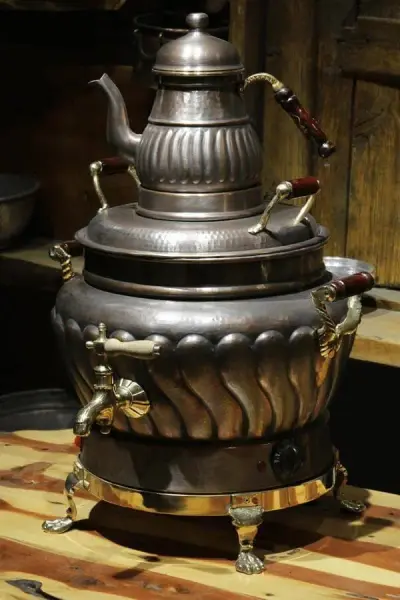
TC10076-3
Often it is not. In US retail a large share of listings sold as copper cookware are copper-coloured non-stick aluminium, and in German catering catalogues a product named Kupfer can carry chrome-nickel steel in its material field. The word describes the colour as often as the metal, so the only reliable answer comes from the material declaration rather than the product name.
No, it only rules things out. Copper is not ferromagnetic, so a magnet will not stick to solid copper. If the magnet sticks, the piece is not solid copper and that result is conclusive. If it does not stick, nothing is proven, because aluminium and austenitic chrome-nickel steel are also non-magnetic. Treat the magnet as a filter, never as a verification.
In solid copper the whole body is copper. In plated pieces the body is steel or aluminium with a thin copper layer on the surface. The difference is not only visual: heat behaviour follows the body metal, the plating wears through with use, and the tin-lining and re-tinning logic that applies to solid copper does not transfer. They are different products at different prices.
One clause that includes and one that excludes is enough. Body material is solid copper; copper-plated steel, copper-plated aluminium and copper-coloured finishes are outside the scope of this enquiry. Then add that body material must be declared as a separate line in the quotation, because the word copper appearing in a product name is marketing text and not a declaration.
Classification follows the material, not the product name. Copper table, kitchen and household articles sit under 7418.10.00 in the Harmonized System, and a copper-coloured aluminium pan does not land there simply because copper appears in its title. Both the duty applied and the document set requested can change with it, so confirm the heading with your own customs broker before declaring.
Because the comparison is being made on name and photograph rather than on material. On a buying sheet where the shared columns are product name and price, a solid copper pan sits beside a copper-coloured one and the reason for the gap is invisible. Adding body material and wall thickness next to the unit price is what makes that gap defensible.
No. A verified badge means the business details were confirmed, not that the material or the quality is guaranteed; it involves no laboratory testing and no material analysis. An uploaded document tells you that the document exists, not that its scope covers your item. The material is fixed by the specification line and checked on the sample.
Other guides covering the same stage of the buying process - continue reading here.

Copper, brass and cupronickel share one tariff heading but are three materials. Alloy definitions, the lead question and the spec lines that separate them.
Exterior finishes on copper cookware compared: hammered, mirror, brushed, antique patina and lacquer, with the spec lines and batch tolerances buyers leave out.
A procurement framework for commercial kitchens: cost lines behind copper, stainless steel and cast iron, scrap value, mixed inventory and a blank TCO model.
Add the products you need to your quote list with quantities and send it by WhatsApp, e-mail or the form. We reply with unit prices and delivery terms.