
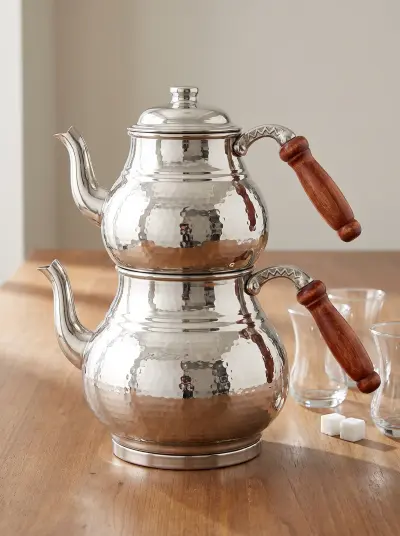
Klasik Copper Turkish Double Teapot — No. 3, light gauge, hand-hammered, nickel-plated
TC10060-2
FDA Food Code 4-101.14(A) bars uncoated copper from food below pH 6. What the clause covers, what it does not, and the lining clauses to put in your RFQ.
Browse the range, add the pieces you need to your quote list and ask for prices in one message. No account, no online prices.
Uncoated copper cannot serve as a cooking surface in a US professional kitchen: FDA Food Code § 4-101.14(A) bars copper and brass from contact with food below pH 6. The clause governs the surface food touches, not the body metal. A tin-lined pan sits outside it, which turns the rule into a sourcing filter rather than a barrier.
The provision is § 4-101.14(A) of the FDA Food Code 2022, and it reads:
copper and copper alloys such as brass may not be used in contact with a FOOD that has a pH below 6 such as vinegar, fruit JUICE, or wine.
It is flagged as a Priority item, which in the Code's own classification is the heaviest category — this is not advisory text.
Three parts carry the meaning, and dropping any one of them produces the misreadings you meet in supplier marketing. The first is material: copper and copper alloys, with brass named. The second is contact — "in contact with", meaning the surface food actually reaches. The third is the food itself: below pH 6, with vinegar, fruit juice and wine given as examples.
Read together, those three parts close the door on unlined copper cooking vessels in a commercial kitchen. Tomato, citrus, vinegar, wine and pickling liquor are daily inputs on a working line, and a supplier assurance that "acidic food will not be cooked in this pan" is not an assurance at all, because the cook holding the pan has not read your contract. In this channel a lining is an entry condition, not a product option.
This is where buyers most often over-read the rule, and over-reading it narrows your supplier pool for no reason.
It does not prohibit lined vessels. Where a continuous tin or stainless lining covers the interior, food never touches copper; it touches tin or steel. The copper remains as the conducting body, which is the entire reason anyone buys copper cookware. A copper pan with an intact lining is not the article the clause describes.
It does not cover every food. The provision is written around food below pH 6 and takes its examples from there. That is not a licence to sell an unlined pan on the argument that a kitchen will only cook neutral food — no service line tracks pH per dish — but it does mean the clause is about a contact condition rather than a blanket prohibition on the metal.
It does not reach non-food-contact goods. Wall pieces, engraved gifts and purely decorative work fall outside it, and unlined copper is entirely legitimate there. That distinction is worth protecting in your catalogue, because it is where hand-raised copper looks best and costs least.
There is a fourth limit, and it belongs on our side of the table. This guide states the text and the scope of the clause. How that clause is adopted or enforced in any particular jurisdiction has not been verified here and is not claimed. Confirm the operative requirement with your own local health authority; what a supplier owes you is evidence that the article matches the text.
Most orders carry more than one of these lines, and the trouble starts when the lines are not named separately.
| Product line | Contact with food | Is unlined copper acceptable |
|---|---|---|
| Cookware: pans, stockpots, sauté pans, coffee pots | Hot and prolonged; acidic contents routine | No — continuous interior lining required |
| Serveware and drinkware: trays, mezze bowls, pitchers, mugs | Short, usually cold; acidic contents possible | No — a lined interior should be specified |
| Decorative and non-food-contact pieces | None | Yes — the clause does not reach this line |
The first two rows map to cookware and serving and presentation; the third to decorative and gift items. Open them as separate lines in the enquiry even when they ship together, and state the interior surface for each line independently. The health reasoning behind the same three-way split is set out in is copper cookware safe.
One practical test settles most borderline items before they reach a purchase order: if the catalogue photograph shows food in the piece, the piece has left the decorative line, whatever the description says. Imagery is a claim, and it is usually the first thing read. Keep the same wording across the catalogue entry, the quotation and the shipping paperwork; a mismatch between those three surfaces is what turns a single item into a question about the whole consignment.
The clause converts into five lines of specification. Written before quoting, they cost nothing; written after delivery, they usually mean remanufacture.
Lining type. Tin or stainless steel, named. A phrase such as "food-safe coating" carries no meaning in a specification and cannot be inspected against.
Continuity of the lining. State that the lining covers the whole interior with no gaps at seams or handle attachments. Because the clause turns on the contacting surface, a gap in the lining is, in technical terms, an unlined copper surface. This is also the item to check on arrival.
The heat limit in the use instructions. The 232 °C figure and the empty-pan warning belong in the instructions shipped with the goods, in the language of the destination market.
The renewal path. If you are buying tin-lined pieces, settle where and how they will be re-tinned at the time of order, not when the lining goes. Suppliers who can answer this separate themselves quickly.
A separate description for decorative items. Non-food-contact pieces go on their own line, with wording that makes no food contact claim.
These five also form the agenda for sample approval. The only thing that ties a production batch to the interior surface you approved is having written them into the order.
Four facts sit behind the specification, and a supplier who volunteers them is easier to work with than one who waits to be asked.
Tin melts at 232 °C. It is a material property, not a manufacturing fault, which is exactly why it belongs in the use instructions: no high flame under an empty vessel, no very high temperature frying. The contents of a sauce or a stew never reach that figure.
Unlined copper reacts with acidic food. This is the physical fact underneath the clause and holds independently of any regulation. A lining removes the reaction by changing which surface food meets.
A tin lining can be renewed; a stainless lining cannot be repaired. Tin wears with use and the workshop re-tins the vessel, so the pan is not scrapped. Stainless never needs renewal, but once the lining is damaged the pan leaves service. The trade-off is set out in tin versus stainless, and the renewal cycle itself in the retinning guide.
Professional pieces typically run 2–3 mm in the body. Gauge is not what this clause governs, but it decides heat behaviour and service life, and it belongs in the same conversation as the lining.
Two suppliers can quote the same pan and only one of them is worth a second email. The difference shows in a handful of concrete signals.
The interior is named on the line item. Lining type appears next to the product name, not as a footnote at the end of the quotation. If you have to search for it, the supplier has not worked this channel.
Product lines are not mixed. Cookware, serveware and decorative pieces sit on separate lines, and the decorative line makes no food contact claim. One mixed line forces you to question the whole list.
The scope of any test report is stated. "We have a test report" says nothing on its own. A report covers the sample tested and the lining that sample carried; a report for a tin-lined sauté pan does not carry a stainless-lined stockpot. If the scope is not written, treat the report as absent.
The heat limit is disclosed rather than hidden. A supplier who writes the melting point of tin into the offer is telling you the instructions will be right. One who omits it is usually hoping you will not ask.
Enforcement is left to you. A supplier who volunteers an opinion about how your inspector reads the clause is overreaching, and that overreach usually travels with other claims worth checking. The useful answer describes the article — lining, continuity, instructions, documentation — and leaves the local interpretation where it belongs, with your own authority.
The rule removes unlined production from the channel entirely, which is a filter working in your favour if you know what to look for. Tinning is not an add-on service in the Turkish copper clusters; it is a trade practised inside the production line, with a dedicated craftsman preparing the vessel and spreading the tin by hand. What the US channel demands is therefore a capability already in place rather than a cost added late.
For a buyer this has a practical consequence at the quotation stage. Where tinning is native to the workshop, the lining is described as part of the article rather than priced as an extra, and the renewal question has an answer. You can filter for cluster and capability on the verified producer map before you shortlist.
It also changes what you are comparing on price. A quotation from a workshop that lines in house and one from a supplier who subcontracts the lining are not the same offer, even at the same figure: the second carries an extra handover, an extra lead time and a weaker answer on renewal. Asking where the tinning happens is a short question that separates the two quickly, and it is worth asking before the sample stage rather than after.
Matching the text of the clause is one thing; being able to show it is another. Responsibility for holding the evidence on goods entering the United States rests with the importer of record, so the file you build matters more than any supplier assurance. The package usually consists of a material and lining specification, a current test report from an accredited laboratory, a written declaration of compliance, and batch traceability. How that package is assembled and how to read a report's scope is covered in the food contact copper compliance guide.
A supplier's assurance sits low in that chain, and stating it plainly is more useful than implying more. A document on file is not a test result. It tells you a document exists; it does not guarantee that the document's scope is adequate, nor that the article complies with any regulation. A badge confirming a supplier's business details is a separate thing again, and it says nothing about the product.
Knowing exactly who is promising what removes the most expensive ambiguity in this trade. When you send your quote list, state the lining type, the continuity requirement and the report scope you expect on each line item; quotes built on the same three points are the only ones that compare. For lining care and expected service life, see tin lining care.
TC10060-2

TC10055-4

TC10055-6
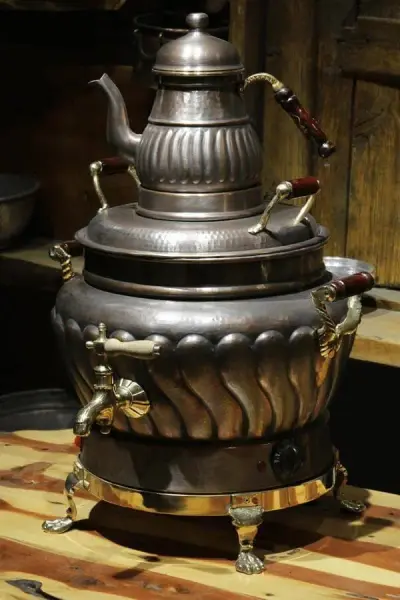
TC10076-3
Not realistically. FDA Food Code § 4-101.14(A) states that copper and copper alloys such as brass may not be used in contact with food that has a pH below 6, naming vinegar, fruit juice and wine. A working kitchen handles those daily, so an unlined interior is not a workable cooking surface there.
No, and reading it that way costs you good product. The clause governs the surface that touches food, not the metal the vessel is made from. In a pan lined continuously with tin or stainless steel, food never reaches the copper; the copper sits underneath as the conducting body. A copper pan with an intact lining is outside the clause.
Contact is shorter and usually cold, but acidic contents are still common on a service line, from citrus to vinaigrettes. Specify a lined interior for anything that holds food or drink, and keep unlined pieces to items that never make contact. Ask for the interior surface to be named on the line item, not described as copper only.
This guide gives the text and the scope of the clause; it does not describe enforcement in any particular jurisdiction, and that question is outside what has been verified here. Confirm the operative requirement with your own local health authority. What a supplier owes you is evidence that the article matches the text, not an interpretation of your inspection.
No, it is a property of the metal, and it belongs in the use instructions. In practice it means no high flame under an empty pan and no very high temperature frying in a tin-lined vessel; the contents of a sauce or a braise never reach that figure. Stainless-lined pieces carry a far higher ceiling and need different wording.
Both satisfy the clause, so the choice is about service life. A tin lining wears and is renewed by the workshop, which extends the life of the vessel. A stainless lining needs no renewal but cannot be repaired once damaged, and the pan leaves service. Heavy line service tends toward stainless, sauce and braise work toward tin.
No. A badge or a document on file says only that a document exists; it does not guarantee that its scope is adequate or that the article meets any regulation. A badge that confirms business details says nothing about the product. Compliance is shown by a current report from an accredited laboratory covering the article, a written declaration of compliance and batch traceability.
Other guides covering the same stage of the buying process - continue reading here.
How to plan a first mixed wholesale copper order from Turkey: choosing a trial range, reading stock codes, setting quantities and writing a quote request.
A decision roadmap for importing Turkish copper to resell: choosing a channel and product families, market rules, landed cost, a first order and after-sales.
Sourcing copper for hotels and restaurants: back of house versus guest-facing specs, custom collections, quantity planning and what your RFQ must contain.
Add the products you need to your quote list with quantities and send it by WhatsApp, e-mail or the form. We reply with unit prices and delivery terms.