
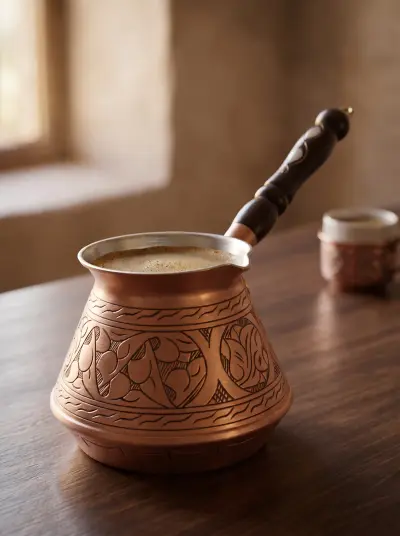
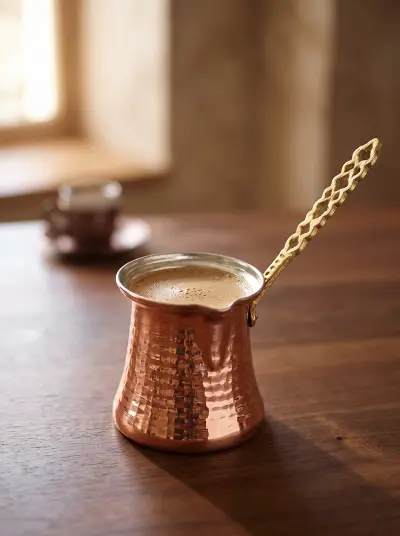
Elit Külhan Copper Turkish Coffee Pot — No. 3, 7 Turkish coffee cups (580 ml), engraved, brushed matt
TC10055-4
A station-by-station copper fit-out list for a Turkish coffee shop: cezve sizes by cup count, serving trays, sugar and lokum dishes, water service and retail.
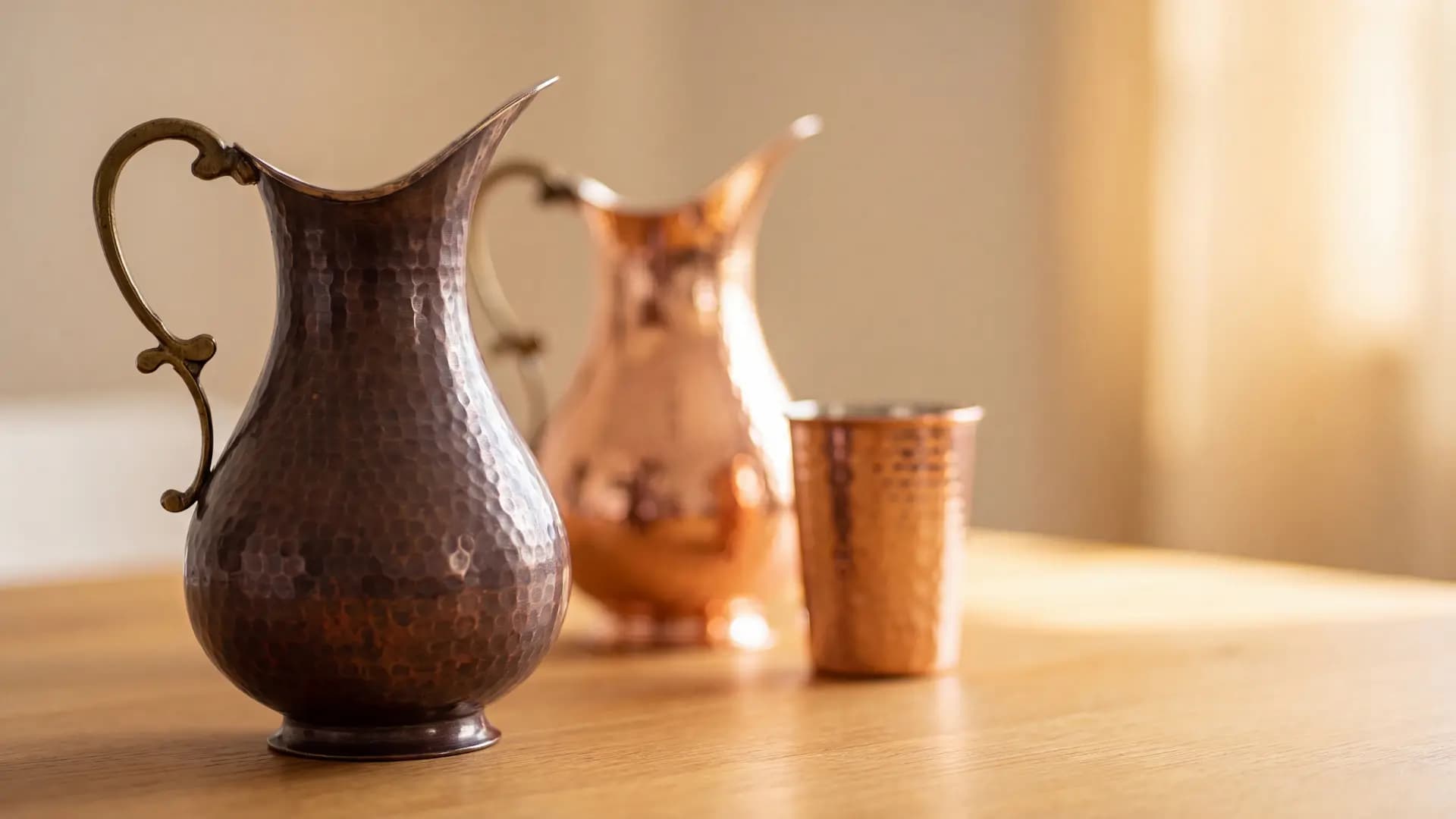
Browse the range, add the pieces you need to your quote list and ask for prices in one message. No account, no online prices.
A Turkish coffee shop needs copper at five stations: brewing (cezves, or Turkish coffee pots, in two or three sizes), tray service, sweets (sugar bowls and lokum, or Turkish delight, dishes), water service and often a retail shelf of cezves. Specify each line by capacity, finish and quantity, then send one quote request.
The copper list of a Turkish coffee shop covers everything a guest sees during the coffee ritual, from the pot on the burner to the dish of lokum beside the cup. Grinders, sand machines, porcelain cups and water filtration come from other suppliers and stay off this list.
Turkish coffee is brewed and served in a sequence the guest watches. Finely ground coffee, water and sugar go into a cezve, the pot heats slowly until the foam rises, and the coffee is poured into a small cup that arrives on a tray with a glass of water and something sweet. Each step has a copper object attached to it, and each object has one property that decides its specification.
| Station | Copper items | Key specification | Catalogue category |
|---|---|---|---|
| Brewing | cezves in two or three sizes, milk pot | capacity in ml and cups, gauge, interior | Turkish copper coffee pots |
| Tray service | round trays, individual saucers | diameter, rim height, finish | Copper trays and saucers |
| Sweets | sugar bowls, lokum dishes | diameter, lid, finish | Copper sugar bowls and delight dishes |
| Water service | pitchers, small tumblers | volume, gauge, finish | Copper pitchers and jugs |
| Retail shelf | boxed cezves, sets of three | set composition, packaging | Turkish copper coffee pots |
Read the table as the skeleton of your order. Each row becomes one or more quote lines with a stock code, a quantity and a finish. The cezve itself, its anatomy, the way it is made and how to judge a sample are covered in the Turkish copper coffee pot sourcing guide; this page deals with the fit-out around it: which sizes a café actually uses, how many pieces each station needs and how the whole list goes out as one request.
Most cafés need a 1-cup cezve (about 90 ml), a 2-cup cezve (150 to 200 ml depending on the series) and one 4- to 6-cup pot for tables, all chosen from a single series. Cafés usually brew to order, one or two cups at a time, because foam is easiest to control in a pot matched to the order, so the small sizes do most of the work.
Read the cup counts carefully. In the catalogue each series rates its own sizes, and the ratings are not interchangeable: a 150 ml Kervan pot is rated for two Turkish coffee cups, while the Sultan series reaches two cups at 200 ml. Pick one series for the bar and compare sizes within it, otherwise a two-cup pot from one line will not behave like a two-cup pot from another.
| Capacity and rating | Catalogue example | Gauge and weight | Typical café use |
|---|---|---|---|
| 90 ml, 1 cup | Kervan No. 1, light gauge, TC10007-1 | 0.60 mm, 62 g | single orders, tasting flights |
| 150 ml, 2 cups | Kervan No. 1, heavy gauge, TC10011-1 | 0.70 mm, 124 g | couples, the workhorse size |
| 200 ml, 2 cups | Sultan No. 1, heavy gauge, TC10036-1 | 0.80 mm, 182 g | two generous cups, brass handle |
| 250 ml, 4 cups | Kervan No. 3, heavy gauge, TC10013-1 | 0.70 mm, 154 g | small tables |
| 390 ml, 6 cups | Kervan No. 5, heavy gauge, TC10015-1 | 0.70 mm, 215 g | groups, family tables |
| 430 ml, 7 cups | Kervan No. 6, heavy gauge, TC10053-1 | 0.80 mm, 240 g | large family tables |
| 580 ml, 7 cups | Elit Külhan No. 3, TC10055-4 | 1.25 mm, 350 g | display brewing, large tables |
The heavy-gauge Kervan pots are listed at 0.70 to 0.80 mm against 0.60 mm for the light-gauge Kervan line, and the Sultan pots run from 0.60 to 0.85 mm depending on size and version. On a busy brewing station a heavier wall is more forgiving of knocks and heats a little more evenly; light-gauge pots are lighter in the hand and suit retail. The Sultan line is also offered with a wooden handle, for example TC10042-1 at 200 ml, which stays cooler to the touch than brass.
Sets are an easy way to cover the range. The Kervan heavy-gauge set of five (TC10016-1) and the Sultan set of five with brass handles (TC10006-1) each bundle several sizes under one code. Confirm in the written quote exactly which numbered sizes a set contains before you count it against your plan. The catalogue also lists copper milk pots at 540 ml (TC10034-1) and 1120 ml (TC10035-1) for cafés that warm milk for milky Turkish coffee or other drinks.
A café cezve needs a lined interior because brewed coffee is below pH 6, must never go on heat empty because tin melts at 232 °C, and works on gas, electric plates and hot sand but not on induction without an adapter disc or magnetic base. The brewing station is the only station where copper goes on heat, so it decides most of the technical specification.
Brewed coffee is acidic, commonly around pH 5, and the US FDA Food Code (section 4-101.14(A)) does not allow copper to contact food below pH 6. The coffee-contact surface of a cezve therefore needs a lining, traditionally tin. The catalogue lists the outer finish of each coffee pot as polished copper, brushed matt or, for the Elit Külhan No. 3 (TC10055-6, 580 ml, 1.25 mm), fully tinned; it has no separate lining field. Write the interior surface as its own line for every cezve and get it confirmed per stock code in the written quote. Never treat nickel plating as a food-contact lining. What the Food Code clause means in practice for an American café is explained in the guide to the US Food Code rule on tin-lined copper.
Tin melts at 232 °C. A tin-lined cezve full of coffee never gets close to that temperature, but an empty pot left on a gas flame or a hot plate can pass it within minutes. Train every barista to fill the pot before it goes on heat and to take it off as soon as it is emptied. A lining that has started to wear or blister can be renewed rather than the pot replaced; how and when that is done is set out in the guide to retinning copper cookware.
Copper cezves work directly on gas, on electric plates and in hot sand. Induction is the exception: copper is not magnetic, so a plain copper pot does not heat on an induction hob at all. The options, from adapter discs to bonded magnetic bases, are compared in the guide to copper cookware on induction. If your fit-out plan uses an induction hob for coffee, settle this before you choose pot sizes.
Sand machines, electric Turkish coffee machines and grinders are not in the catalogue and are sourced separately. Fix the brewing method first, because it changes the pot you order: a sand bar needs handles long enough to keep hands clear of the hot sand, while a gas or electric plate bar has a free choice of handle, including the compact smooth Moda pots such as TC10049-1 at 220 ml.
Turkish coffee is traditionally served on a small tray or saucer that carries the cup, a glass of water and a piece of lokum, and the tray is the piece the guest looks at longest. Choose its size from what it must hold, then choose the finish to match the cezve.
The catalogue's trays category gives you two working sizes. The Otağ hand-hammered saucer is offered singly (TC30041-1) and as a set of six (TC30042-1), at 0.50 mm, in polished copper, nickel-plated, oxidised and brushed matt. For two-person or table service, the Çaldıran round tray (TC30043-1) is listed at 34 cm in diameter with a 1.5 cm rim, 0.95 mm and 714 g, in polished copper or nickel-plated.
Before you fix the tray line, put your actual cup, its saucer and the water glass on a sample. The Otağ pieces are listed as tea saucers; whether one carries a full coffee setting depends on your cup and glass, so check the dimensions per stock code in the written quote. A 34 cm tray comfortably carries two settings with the cezve between them, which is a popular way to bring coffee for two to the table with the pot still warm.
Porcelain coffee cups are not catalogue items, and neither are metal cup holders. If you want a copper holder around a porcelain cup, raise it as a separate custom request; it is quoted on its own line and takes noticeably longer than stock items.
Sugar and lokum are dry, so the dishes that carry them are the simplest pieces on the list to specify: diameter, lid and finish. They are also the pieces that go missing most often, which affects quantity more than specification.
Turkish coffee is usually sweetened in the pot, so a café that brews to order keeps sugar at the brewing station rather than on each table. Tables that add their own sugar need a bowl, ideally one with a lid. The sugar bowls category covers both uses:
Because the contents are dry, the interior lining matters less here than on the brewing station. Still write the intended use on the quote line, so nobody later fills a lokum dish with a lemon dessert.
A glass of still water traditionally comes with every Turkish coffee, so a coffee shop needs pitchers on the counter and small glasses on every tray. Water is not acidic, which makes it one of the few contents that copper can carry without a lining, though the interior should still be confirmed per stock code.
The pitchers and jugs category runs from a 500 ml milk jug to 2500 ml. The Maraş pitcher No. 1 is listed at 1000 ml (TC30077-1, hand-hammered, 0.80 mm), the Antalya No. 1 at 1400 ml (TC30068-1, 0.70 mm) and the London pitcher at 2000 ml (TC30079-1, 1.00 mm, 840 g), the last in four finishes including oxidised and brushed matt. A 1000 ml pitcher is light enough for a server to carry to tables all day; a 2000 ml pitcher suits a self-service water station. Pour, drip and sizing checks are in the guide to copper water pitchers for restaurants.
For glasses, the smaller copper tumblers in the drinkware range are the closest fit, such as the Bevanda tumbler at 300 ml (TC20005-1) and the Copper Tumbler No. 1 at 330 ml (TC20011-1), both covered in wholesale copper water tumblers. Many cafés keep glass for water on the tray and use copper only for the pitcher; that is a matter of style, and it cuts the polishing load. If the same counter also serves tea in tulip glasses, the double teapots, tea trays and saucers for that service are covered in the guide to wholesale Turkish tea sets.
A retail shelf lets guests take the ritual home, and for a Turkish coffee shop it is often the easiest extra revenue line: the cezve they just watched in use is now on a shelf by the till. Retail pieces are chosen for gift appeal and packaging rather than for brewing-station durability.
Sets of three sell well because they explain themselves. The catalogue lists the Kervan small set of three (TC10025-1, sizes 1 to 3), the Eylül set of three (TC10048-1) and the smooth Moda set of three (TC10054-1). Single light-gauge pots such as the Kervan 150 ml (TC10008-1) suit an impulse purchase beside a bag of coffee. Keep the retail range narrow, two or three references, so the shelf stays tidy and reorders are simple.
If you want your café's name on the pots or on a gift box, engraving and branded packaging are quoted as separate lines and add lead time; methods, placement and how tooling cost spreads over the order volume are explained in the guide to copper logo engraving and branding.
Count each item by peak use plus circulation: the pieces in service at the busiest hour, the pieces in the wash-up and on the drying rack, and an allowance for loss. Small, light pieces such as saucers and lokum dishes need the largest allowance.
A worked example, with assumptions you should replace with your own: a 40-seat café expects up to 30 coffees in its peak hour, mostly single and double orders, with two burners on the brewing station.
| Item | How to count | Example count |
|---|---|---|
| 1-cup and 2-cup cezves | burners in use, times pots in rotation per burner, plus spares | 4 per size |
| 4-cup and 6-cup cezves | tables of four or more at peak, plus one spare | 2 per size |
| Individual saucers | settings in service plus settings in the wash-up | 24 |
| 34 cm trays | two-person settings at peak, plus spares | 6 |
| Lokum dishes | one per setting plus a loss allowance | 30 |
| Water pitchers | one per service station plus one at the counter | 3 |
These are illustrative numbers for this one scenario, not a benchmark. What carries over is the method: once it is written down, the opening order and later reorders use the same logic, and losses in the first months tell you exactly where to adjust.
Once you have counts, choose one finish per station. Polished copper looks brightest and needs the most polishing; oxidised and brushed matt finishes hide handling marks; nickel-plated pieces keep a silver colour. Write the finish into every line rather than once at the top of the request.
Turn the fit-out list into a quote list by giving every line a stock code, a quantity, a finish and a note on the interior surface, and then sending all lines together. A complete list returns a written quote in one round; a list with open questions returns questions.
Browse the full Turkish copper catalogue by category, add each product with its quantity, and send it from your wholesale quote list by WhatsApp, e-mail or the form. The wholesale price, minimum quantity, lead time and shipping are then given in writing for that order. The page on wholesale copper cezve supply covers set composition and packing for larger coffee programmes, and if this is your first order from Turkey, the first wholesale copper order guide walks through trial ranges and stock codes. A coffee bar inside a restaurant usually orders together with the dining room; the Middle Eastern restaurant copper checklist sets out the kitchen-to-table list.
TC10055-4
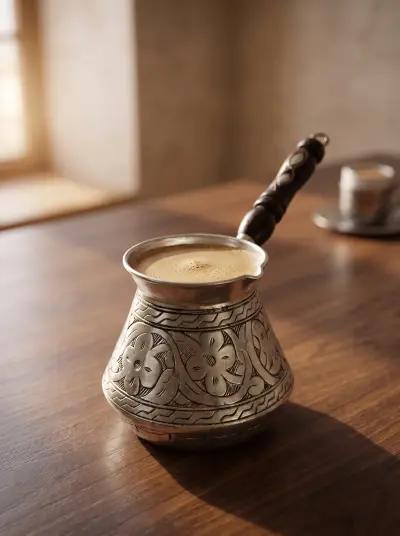
TC10055-6
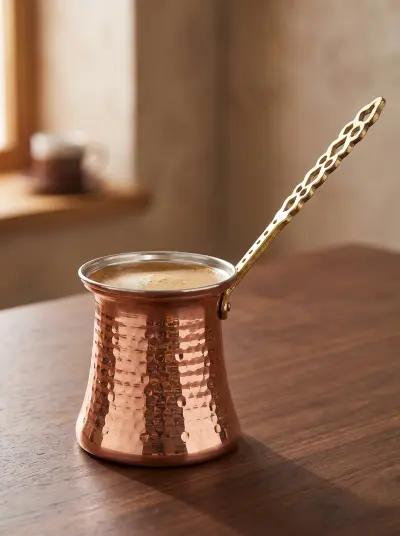
TC10001-1
TC10002-1
It is better not to. Alkaline machine detergents and long hot cycles dull the outer copper, can loosen brass handle fixings over time and wear a tin interior faster. Most coffee bars rinse the cezve straight after brewing, wash it by hand with a mild detergent and dry it at once. Brief the closing staff on this, because one week in the machine can undo the finish you chose.
Copper oxidises in contact with air, heat and handling, so polished copper moves from bright salmon towards a deeper brown. On a brewing station that also sees flame, the change is faster. Some cafés like the worked look; others polish weekly with a copper cleaner. A brushed matt finish, listed for the Külhan pots such as TC10055-4, shows the change least.
You can, and some cafés do it on purpose: a polished copper cezve on a nickel-plated tray reads as two-tone and makes the pot the focus. The risk is accidental mixing, where two finishes arrive because two stock codes were picked without a plan. Decide the rule per station before ordering, write the finish into each line of the quote list and keep it on file for reorders.
Yes, for neutral or mildly acidic drinks such as warm milk, salep or hot chocolate, provided the interior is lined and confirmed per stock code. Keep lemon drinks, fruit infusions and anything with vinegar out of copper pots, because they are well below pH 6. Many cafés keep separate pots for milk drinks so the coffee pots are not stained or flavoured by milk residue.
Give each buyer a short care card: fill the pot before it goes on heat, never leave it empty on a burner, wash by hand and dry straight away, and expect the copper to darken with use. Mention that a worn tin interior can be renewed by a retinning service. A clear card reduces returns and complaints, and it can carry the café name as part of the gift.
Usually not. A tray or saucer carries the cup, the water glass and a piece of lokum, so its surface does not hold liquid food for any length of time. A tray that will carry food directly, such as pastries or wet desserts without a plate, is a different case. Write the intended use on the quote line so the interior question is settled in the written quote.
Other guides covering the same stage of the buying process - continue reading here.
How a Turkish, Arab, Persian or Balkan grocery adds a copper housewares shelf: cezves, double teapots, saucers, burners, lokum dishes, seasons and care cards.
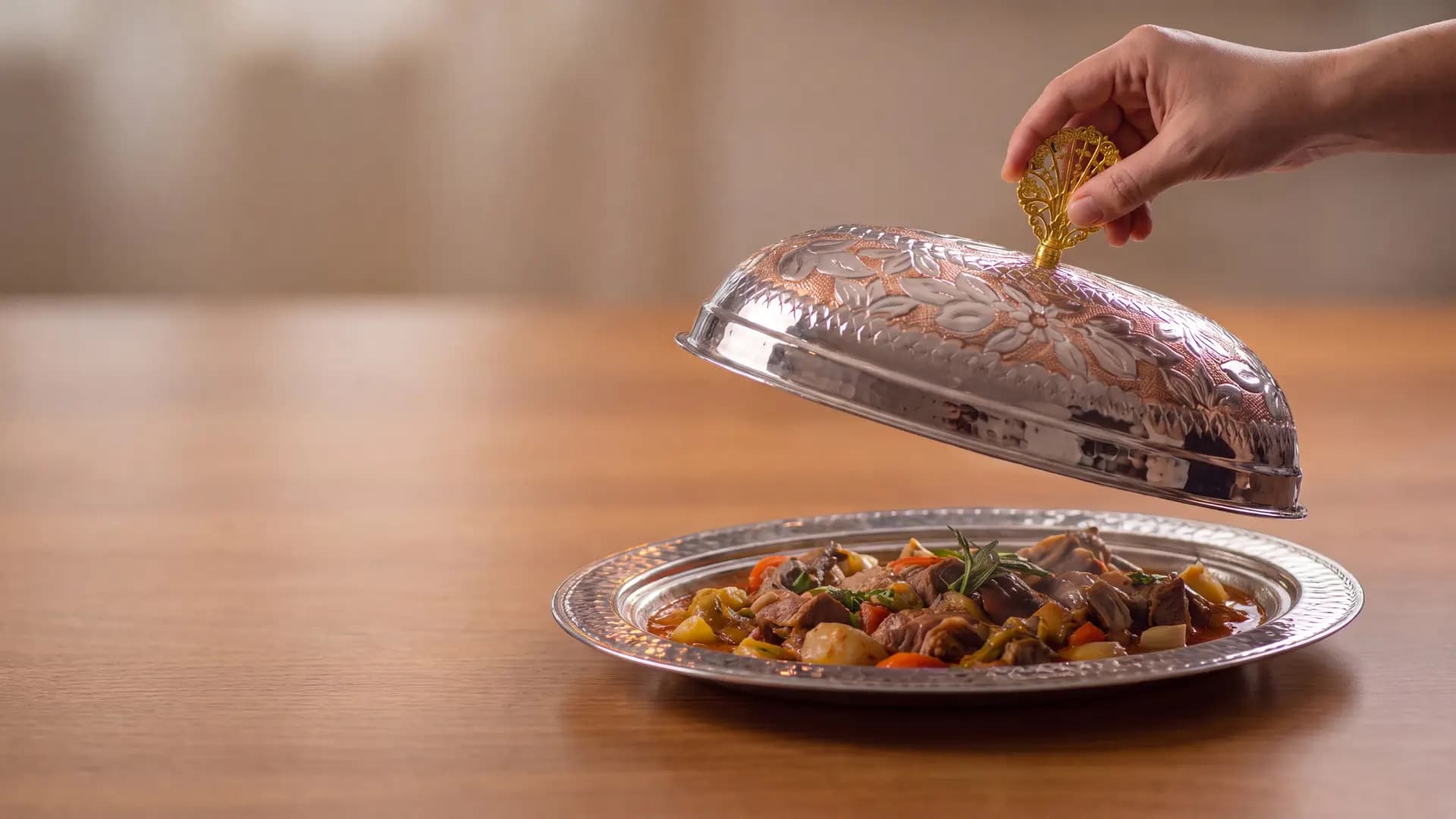
How hotels, confectioners and favour buyers use copper Turkish delight dishes and sugar bowls: size by use, lids, which sweets suit them, engraving and stock.
Sourcing copper serveware for Gulf hospitality: dallah coffee pots, kabsa trays and custom OEM forms, with gauge, lining and Saudi, UAE, Egypt compliance notes.
Add the products you need to your quote list with quantities and send it by WhatsApp, e-mail or the form. We reply with unit prices and delivery terms.