
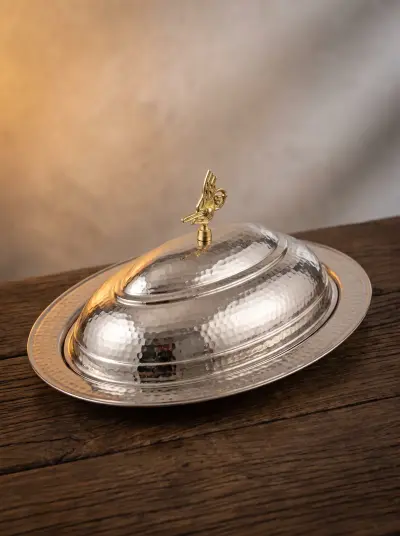
Odabaşı Copper Boat-Shaped Serving Plate with Signature Lid — 30 cm, hand-hammered, nickel-plated
TC30001-2
How event rental firms and caterers buy copper serveware: durable lines, finishes for repeated polishing, turnaround cleaning, damage tracking and crating.
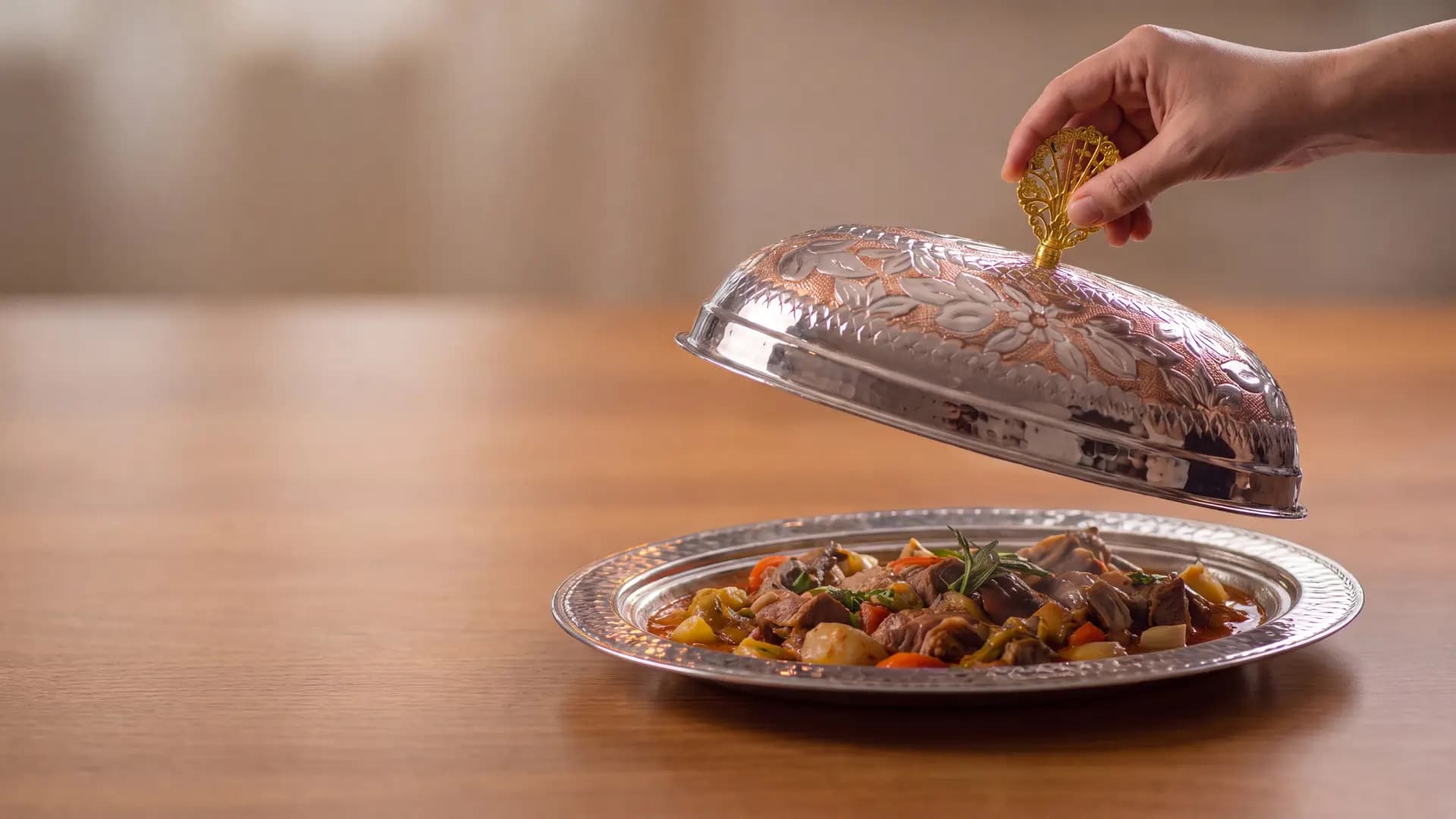
Browse the range, add the pieces you need to your quote list and ask for prices in one message. No account, no online prices.
Event rental and catering companies should buy copper serveware the way they buy any hire fleet: choose hand-hammered lines that come in several sizes and finishes, favour nickel-plated or oxidised surfaces where polishing time is short, record every piece by stock code and condition, and crate it by size so it survives years of hires.
The pieces that earn their place in a hire fleet are the ones clients ask for at almost every buffet, banquet and wedding: serving plates, punch bowls, round trays, water pitchers and ice buckets. In The Coppery catalogue each of these comes in several sizes or finishes under one design, which is what makes a hire line reorderable.
Sizes, wall thickness and weights below are the listed figures; stock status is as of November 2026.
| Piece | Stock codes | Listed size, wall, weight | Stock |
|---|---|---|---|
| Kebab boat plate, no lid | TC30016-1, TC30015-1, TC30013-1, TC30014-1, also -2 nickel-plated and -3 oxidised | 25, 30, 35, 40 cm in that order; 1.00 mm; 440 to 916 g | in stock |
| Saltanat boat plate, domed lid | TC30003-1 to TC30007-1, also -2 nickel-plated | 25 to 47 cm; 1.00 to 1.20 mm; 770 to 2364 g | in stock |
| Hanedan boat plate, classic lid | TC30008-2 to TC30011-2 | 25 to 40 cm; 1.00 mm; 766 to 1796 g | in stock |
| Punch bowl | TC30045-1, TC30046-1, also -3 oxidised | 27 and 32 cm; 0.70 and 0.80 mm; 1130 and 1430 g | in stock |
| Çaldıran round serving tray | TC30043-1, TC30043-2 | 34 cm; 0.95 mm; 714 g | in stock |
| Pınar pitcher No. 2 | TC30075-1, TC30075-2, TC30075-3 | 2000 ml; 1.20 mm; 850 g | in stock |
| Mercan ice bucket | TC40016-1, TC40016-3 | 24 cm; 0.80 mm; 1220 g | in stock |
| Bevanda tumbler | TC20005-1 to TC20005-4 | 300 ml; 0.70 mm; 156 g | in stock |
The kebab boat plate is the workhorse of this list. Four sizes in three finishes give twelve stock codes from one design, all at 1.00 mm, and the unlidded plate is the easiest copper item to stack, wash and count. The copper serving plates category also carries the lidded Saltanat, Odabaşı and Hanedan lines; how those lids behave in covered service is set out in the guide to lidded copper serving platters for banquets.
Not every model is available: the 34 cm machine-patterned tray TC30044-2 and the polished Mini Breakfast Bowl TC30047-1 were listed out of stock as of November 2026. Check status before a line becomes the backbone of a package you advertise.
Copper dents and scratches but rarely breaks, so a well-made piece can stay in a hire fleet for many seasons, where glass and china are written off after one drop. A hire life usually ends with a damaged rim, a loose handle, a lid that no longer fits or a worn finish.
Wall thickness is the first durability signal. Across the lines above it runs from 0.70 mm on the 27 cm punch bowl to 1.20 mm on the 25 cm Saltanat plate and the Pınar pitcher, and the Otağ tea saucers in the copper trays category are listed at 0.50 mm. Thicker sheet resists the edge knocks of hurried crate loading; thin pieces should travel in their own slot, never stacked.
Weight is the second signal, because copper has a density of 8.96 g/cm³ and, for the same form and size, weight tracks sheet thickness closely. Of the two 34 cm round trays, the hand-hammered Çaldıran TC30043-1 weighs 714 g at 0.95 mm; the machine-patterned TC30044-2 weighs 410 g and its listing gives no thickness at all. For a hire fleet the heavier tray is the safer buy, and the missing figure is a question for the written quote.
Shape matters as much as gauge. Spouts, handles, finials and lid rims take the impacts, so inspect these points closely on the first delivery.
A rental piece pays for itself when lifetime hire income exceeds purchase cost plus cleaning, polishing, repairs, storage and losses. Copper's case holds only if clients pay more to hire it than plain stainless or white china, which a few trial packages can test, and if the pieces have a long working life. It weakens when a line sits in storage, so buy deep in pieces booked every weekend and shallow in statement pieces.
For a fleet cleaned after every hire, nickel-plated and oxidised copper need the least work between events, while polished copper looks warmest but tarnishes fastest and asks for the most labour. Nickel plating is a decorative surface finish and should never be treated as a food-contact lining.
| Finish | Between hires | Long-term wear | Best rental use |
|---|---|---|---|
| polished copper | darkens within days of handling; polish before most events | each abrasive polish removes a little metal and softens the hammer marks | weddings and galas where warm copper is the point |
| nickel-plated | wash and dry; little tarnish | years of scouring can wear the plating through on rims and high points | high-turnover buffets and corporate catering |
| oxidised | wash and dry; never polish | polish strips the dark patina and leaves bright patches | rustic, vintage and outdoor themes |
| brushed matt | wash and dry; hides fine scratches | refinishing the grain is a workshop job | pitchers, tumblers and saucers |
The finish suffix in the stock code is what tells these apart: -1 polished copper, -2 nickel-plated, -3 oxidised, -4 brushed matt. Among serving plates, the hand-engraved Hanedan plates TC30017-7 to TC30020-7 also carry a -7 copper-and-tin two-tone finish, best kept to small numbers of statement pieces. TC30015-1, TC30015-2 and TC30015-3 are one 30 cm kebab boat plate in three finishes, each with its own care routine. Record the suffix on every inventory line: an oxidised plate polished by mistake matches nothing else in the fleet.
Polished copper is still worth carrying as a premium package, with the polishing time priced into the hire. Cleaning products and what to avoid on each surface are covered in the guide to copper care and lifespan.
Wash returned copper the same day, dry it straight away, inspect it, and only then decide whether it needs polish. Food residue and standing water left on copper overnight are what turn a short cleaning job into a long one, and acidic residues can stain the surface permanently.
A turnaround routine that works for most depots:
Commercial dishwashers use strongly alkaline detergents, which is why many rental companies hand-wash copper on a separate line. Polishing is the bottleneck: washing and drying scale with staff and sinks, while hand-polishing takes far longer per piece, so a depot that clears a weekend's returns by midweek often cannot polish them all. A fleet weighted towards nickel-plated and oxidised pieces turns around on washing time alone.
Give every piece an inventory number tied to its full stock code, record its condition at check-out and check-in with a photograph, and charge damage by grade agreed in advance. Copper rarely shatters, so most disputes are about dents, scratches and missing lids.
| Grade | What it looks like | Action |
|---|---|---|
| A, event-ready | no dents, even finish, lid fits | premium bookings and front-of-house display |
| B, light wear | fine scratches, small dent away from the display face | buffets, staff-served stations, back bar |
| C, visible damage | dent on the rim or face, worn plating, bent handle | withdraw and get a repair or refinishing quote |
| Retired | split seam, loose rivet, lid no longer seats | remove from the fleet and reorder by stock code |
A few rules keep the record useful:
Deposits and charges belong in your own hire terms and follow local consumer rules. Settle three things there: what counts as damage at each grade, what the client pays for a C grade or a lost piece, and how the evidence is shown.
Size the fleet in kits per table or per buffet station, multiply by the largest number of events that overlap within one turnaround cycle, and add a spare margin for damage and pieces still being cleaned. Buying by guest count alone ignores the overlap, and the overlap is what runs a rental company short in peak season.
A worked example shows the method. The figures are assumptions for illustration, not recommendations:
One wedding therefore needs 40 plates, 20 pitchers, 4 punch bowls and 2 ice buckets. With two such weddings on one Saturday, and the first set back in its crates only by Tuesday, a Friday event that week needs a third set: 120 plates and 60 pitchers before spares. Set the spare margin after the first season from your damage log.
Buffet stations follow the same logic: a self-service line refills from the kitchen, so it uses fewer, larger pieces such as the 47 cm Saltanat TC30007-1. The par-level method used by hotel purchasing teams applies almost unchanged to a rental fleet, and the guide to hotel OS&E copper procurement sets it out step by step.
Water and bar set-ups need their own kit list. The copper pitchers and jugs and copper ice buckets categories cover those pieces, and the guides to copper water pitchers for restaurants and wholesale copper barware for bars explain capacity choices and what each drink does to the metal.
Crate copper by line and size in compartmented crates with soft dividers, give lids their own slots, and keep each crate light enough for two people to lift safely. Most damage in transit comes from copper pieces touching each other, so separation matters more than padding thickness.
Practical points for the depot:
The export cartons copper arrives in from Turkey are built for one journey, not weekly van loading, so keep them for reserve stock. What inbound packing to ask for is set out in the guide to copper export packing and containers.
The Coppery catalogue has no chafing dishes, so rental companies pair copper plates, bowls, trays and pitchers with chafers they already own or source elsewhere. Match the copper finish to the chafers and use copper where it adds most: cold displays, bread, fruit, desserts and the bar.
Nickel-plated copper sits comfortably beside stainless steel chafers, while polished copper suits brass or copper-finish chafers. Some copper-coloured chafers on the market are copper-plated stainless steel, so read the guide to copper serving trays and chafing dish sets before matching. The copper serving bowls category adds punch bowls as centrepieces on an otherwise stainless buffet.
Hot food held for a long service stays in the chafer's own pans; the footed charcoal-heated kebab platters are the only catalogue serving plates built to sit over heat.
Food contact needs care with every copper piece. The catalogue listings do not state an interior lining, so confirm the interior of each stock code in the written quote and choose between tin-lined, stainless-lined and unlined accordingly. Dressings, tomato dishes, citrus and wine-based food are below pH 6, and the US FDA Food Code, section 4-101.14, does not allow copper to contact food below that line. For unlined pieces, use a liner, a board or an insert between acidic food and the metal; the guide to the FDA Food Code copper rule explains where the line falls and how it is applied.
Standardise on a small number of design families that come in several sizes and finishes, record every piece by its full stock code with the finish suffix, and send the whole fleet plan as one quote list. The written quote then answers availability, minimum quantity, lead time and shipping for each line together.
Families with depth are the safest base. The kebab boat plate gives twelve codes across four sizes and three finishes, Saltanat gives five sizes in two finishes, and the Antalya and Pınar pitchers come in polished copper, nickel-plated and oxidised. Hand-hammered pieces vary slightly from batch to batch, so a small reserve of the most-booked codes bought with the first order keeps a wedding set uniform while replacements are in production.
To build the request, browse the full copper catalogue, add each stock code with its quantity to the quote list, and send it by WhatsApp, e-mail or the form. Say whether it is a first fleet or a top-up, which lines must match existing stock, and when the first event goes out. The HORECA copper equipment supply page covers the wider supply arrangement for hospitality buyers, and the first wholesale copper order guide sets out each step of a first order, from quote list to delivery.
TC30001-2
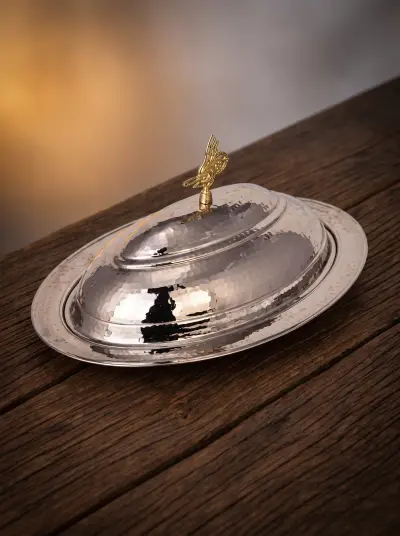
TC30002-2

TC30040-1
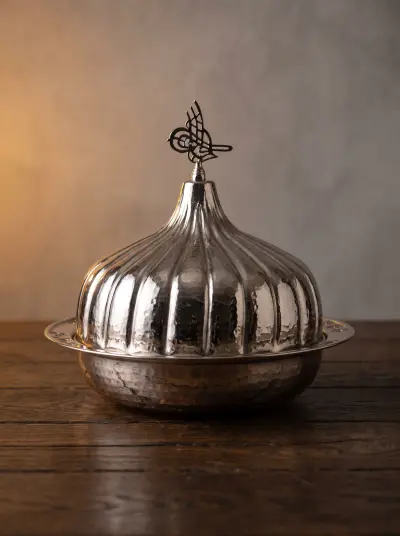
TC30038-2
Yes, but plan for the conditions. Rain left to dry on polished copper leaves water spots, and salt air speeds up tarnish and can start green verdigris in seams and under rims if pieces are put away damp. Wipe pieces dry at the end of the event rather than at the depot, rinse anything used near the sea in fresh water on return, and expect beach hires to need a full polish before the next booking.
Only with a barrier between drink and metal, unless the interior is confirmed as lined. Fruit punch and sangria are acidic and fall under the FDA pH 6 rule covered in the food-contact section above. Many caterers set a glass or stainless liner bowl inside the copper punch bowl, so the copper stays a display piece and the liner holds the drink.
Many rental companies sell hired pieces to clients, especially after weddings, and it is a tidy way to move older stock. Price ex-hire copper by condition grade and current replacement cost, sell B-grade pieces first, and reorder the same stock code to rebuild the fleet. Check that your hire terms allow the sale before quoting a client a figure.
Switch to an unheated serving plate of a similar size for that venue. The footed charcoal-heated kebab platters need live coals under the body, and some venues forbid any open flame indoors or ask for a fire risk assessment first. Ask the venue before the menu is confirmed, and keep a set of plain kebab boat plates in the fleet as the fallback for those bookings.
Metal tongs and spoons leave fine scratches, more visibly on polished copper and on the high points of an oxidised finish. Hand-hammered texture disguises light marks better than a smooth surface. Supplying wooden, melamine or silicone-tipped serving utensils with the copper pieces cuts the wear, and placing food on a liner or a board inside the platter keeps utensils off the metal altogether.
Charge the lid as its own line, not the whole piece. A lidded Saltanat or Hanedan plate is two inventory items, so ask in the quote request whether a replacement lid can be quoted against the body's stock code, put that figure in the hire terms as the loss charge, and keep a few spare lids for the most-booked sizes.
Other guides covering the same stage of the buying process - continue reading here.
How to choose copper serving platters with lids for banquets and room service: boat, round and fish shapes, 23-60 cm sizes, lid styles, lining and quantities.
How to put copper tableware on a hotel OS&E list: outlet mapping, par level method, spec sheet fields, samples, outlet labelling and the retinning lifecycle.
How to specify copper serving trays, chafing dish sets and mezze bowls for hospitality: telling solid copper from copper-plated stainless, lining and packing.
Add the products you need to your quote list with quantities and send it by WhatsApp, e-mail or the form. We reply with unit prices and delivery terms.